



Filter
-
(133)
-
(733)
-
(4)
-
(1)
-
(47832)
-
(91)
-
(25)
-
(14)
-
(433)
-
(7)
-
(181)
-
(8)
-
(33)
-
(17)
-
(7)
-
(9)
-
(9)
-
(5)
-
(21)
-
(8)
-
(12)
-
(9)
-
(3)
-
(10)
-
(10)
-
(56)
-
(45)
-
(12)
-
(3)
-
(7)
-
(6)
-
(5)
-
(8)
-
(7)
-
(11)
-
(58)
-
(13)
-
(30)
-
(8)
-
(5)
-
(10)
-
(5)
-
(14)
-
(4)
1521 - 1530
of 52753 results
-
 Article Scientific ResearchPublished papers are the currency of success in neuroscience, yet the process of publishing a paper can be mysterious, especially to trainees.Jun 20, 2017
 -
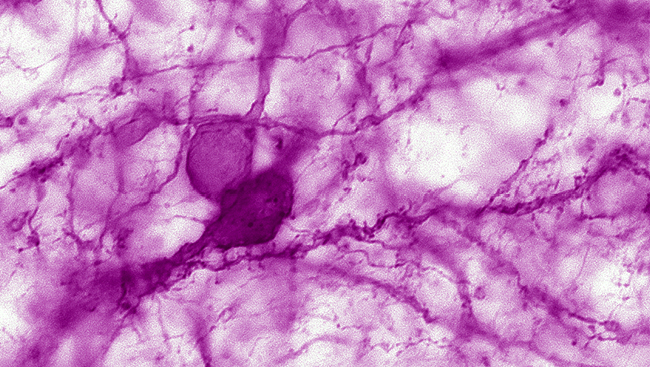 Webinar Scientific ResearchOur understanding of the cell biology of mitochondria has exploded in the last decade, providing a renewed understanding of their contribution to neurological diseases ranging from pediatric encephalomyopathies to Alzheimer’s, Huntington’s, and others. In this webcast, select faculty from the 2016 Neurobiology of Disease Workshop will continue the discussion, emphasizing mitochondrial motility and neurodegeneration, mitochondrial function in Alzheimer ’s disease, and the role of mitochondria in immunity and links to neuroinflammation. After the scientific presentations, join all speakers in the Neuronline Community for a live chat.Jun 19, 2017
 -
 Journal ArticleA unique pool of immature glutamatergic neurons in the primate amygdala, known as the paralaminar nucleus (PL), are maturing between infancy and adolescence. The PL is a potential substrate for the steep growth curve of amygdala volume during this developmental period. A microglial component is also embedded among the PL neurons, and likely supports local neuronal maturation and emerging synaptogenesis. Microglia may alter neuronal growth following environmental perturbations such as stress. Using multiple measures in Rhesus Macaques, we found that microglia in the infant primate PL had relatively large somas, and a small arbor size. In contrast, microglia in the adolescent PL had a smaller soma, and a larger dendritic arbor. We then examined microglial morphology in the PL after a novel maternal separation protocol, to examine the effects of early life stress. After maternal separation, the microglia had increased soma size, arbor size and complexity. Surprisingly, strong effects were seen not only in the...Jan 3, 2025
 -
Journal ArticleFragile X autosomal homolog 1 (FXR1), a member of the fragile X messenger riboprotein 1 family, has been linked to psychiatric disorders including autism and schizophrenia. Parvalbumin (PV) interneurons play critical roles in cortical processing, and have been implicated in FXR1-linked mental illnesses. Targeted deletion of FXR1 from PV interneurons in mice has been shown to alter cortical excitability and elicit schizophrenia-like behavior. This indicates that FXR1 regulates behaviorally relevant electrophysiological functions in PV interneurons. We therefore expressed a genetically-encoded hybrid voltage sensor in PV interneurons, and used voltage imaging in slices of mouse somatosensory cortex to assess the impact of targeted FXR1 deletion. These experiments showed that PV interneurons lacking FXR1 had excitatory synaptic potentials with larger amplitudes and shorter latencies compared to wild type. Synaptic potential rise-times, decay-times, and half-widths were also impacted to degrees that varied bet...Jan 3, 2025
-
Journal ArticleA comprehensive analysis of everyday sound perception can be achieved using Electroencephalography (EEG) with the concurrent acquisition of information about the environment. While extensive research has been dedicated to speech perception, the complexities of auditory perception within everyday environments, specifically the types of information and the key features to extract, remain less explored. Our study aims to systematically investigate the relevance of different feature categories: discrete sound-identity markers, general cognitive state information, and acoustic representations, including discrete sound onset, the envelope, and mel-spectrogram. Using continuous data analysis, we contrast different features in terms of their predictive power for unseen data and thus their distinct contributions to explaining neural data. For this, we analyse data from a complex audio-visual motor task using a naturalistic soundscape. The results demonstrated that the feature sets that explain the most neural varia...Jan 3, 2025
-
 Article Professional DevelopmentAs an undergraduate, the best way you can decide if you want to go to grad school is to sample some of the laboratory environments (for a couple of months, not years) that you think might be interesting.Jun 15, 2017
 -
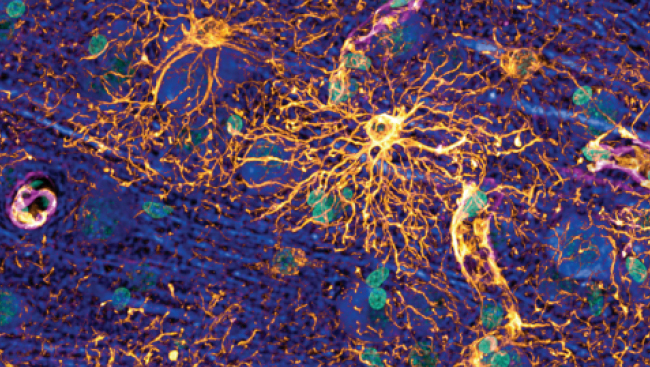 Article Scientific ResearchSerotonin (5-hydroxytryptamine, 5-HT) is a neurotransmitter implicated in a vast array of sensory, motor, and cognitive functions.Jun 15, 2017
 -
 Article Professional DevelopmentWhen scientists communicate effectively about their research, science thrives. Making our science digestible to nonscientists helps people understand the wider relevance of science in society. Given the current stark funding realities, making our science accessible can also promote more informed decision-making, especially with policymakers, government agencies, and other types of funders.Jun 14, 2017
 -
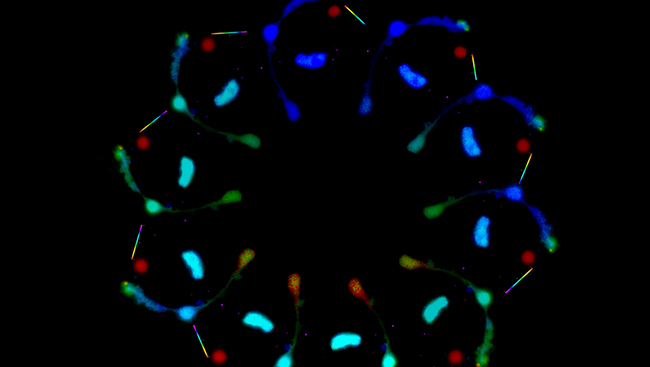 Article Annual Meeting Scientific ResearchUntil recently, analyzing a single cell to determine what genes it expresses and how it functions was beyond reach. But new techniques have emerged within the last 10 years that give researchers this capability, as well as the ability to analyze aspects of many individual cells at once. When combined with analyses of cell shape, connectivity, and activity, probing the genomes and expression profiles of single cells has the potential to yield powerful insights, yet also holds challenges.Jun 13, 2017
 -
Journal ArticleThe subjective visual vertical (VV), the visually estimated direction of gravity, is essential for assessing vestibular function and visuospatial cognition. In this study, we aimed to investigate the mechanisms underlying altered VV perception in stroke participants with unilateral spatial neglect (USN), specifically by examining their eye movement patterns during VV judgment tasks. Participants with USN demonstrated limited eye movement scanning along a rotating bar, often fixating on prominent ends, such as the top or bottom. This suggests a reflexive response to visually salient areas, potentially interfering with accurate VV perception. In contrast, participants without USN showed broader scanning around the center of the bar. Notably, participants with USN without frontal lobe lesions occasionally exhibited extended scanning that included the bar’s center, which was associated with accurate VV judgments. These findings suggest that (1) a tendency to fixate on peripheral, prominent areas and (2) fronta...Jan 2, 2025




