



Filter
-
(133)
-
(733)
-
(4)
-
(1)
-
(47830)
-
(91)
-
(25)
-
(14)
-
(433)
-
(7)
-
(181)
-
(8)
-
(33)
-
(17)
-
(7)
-
(9)
-
(9)
-
(5)
-
(21)
-
(8)
-
(12)
-
(9)
-
(3)
-
(10)
-
(10)
-
(56)
-
(45)
-
(12)
-
(3)
-
(7)
-
(6)
-
(5)
-
(8)
-
(7)
-
(11)
-
(58)
-
(13)
-
(30)
-
(8)
-
(5)
-
(10)
-
(5)
-
(14)
-
(4)
1481 - 1490
of 52751 results
-
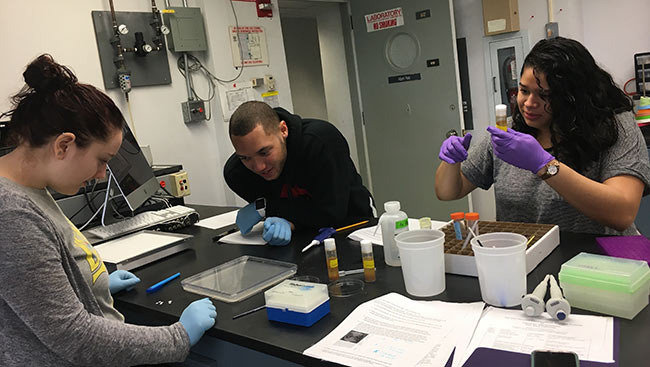 Article TrainingThere are many reasons to have undergraduates join your lab for the summer, including mentoring practice for postdocs and a chance to guide the upcoming generation of researchers.Sep 20, 2017
 -
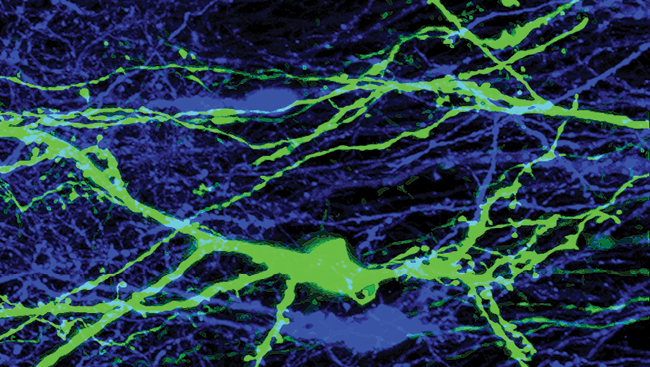 Article Scientific ResearchMaterial below is adapted from the SfN Short Course, Correlating Cellular Morphology, Physiology, and Gene Expression Using Patch-seq, by Cathryn R. Cadwell, PhD, and Andreas S. Tolias, PhD. Short Courses are day-long scientific trainings on emerging neuroscience topics and research techniques held just prior to SfN’s annual meeting. In the quest to understand the brain, gathering information about the ways neurons communicate is essential. Coupling cell type analysis with electrophysiological measurements obtained through patch-clamping, a host of techniques that measure electrical activity in neurons, has the potential to reveal new insights about how specific neuronal cell types communicate, and thus how the brain works.Sep 19, 2017
 -
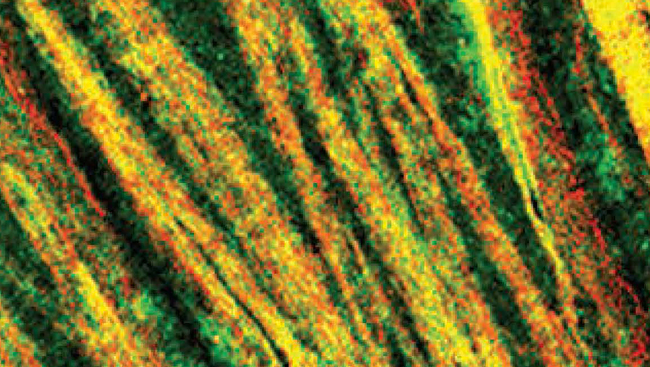 Article Scientific ResearchThe cerebral cortex is the seat of higher cognitive functions such as learning, memory, planning, language acquisition, attention, and consciousness.Sep 14, 2017
 -
 Article OutreachInspired by her research on the neurobiology of language, Flora Vanlangendonck created a short video for SfN’s Brain Awareness Video Contest to explain how the brain processes language and the historical discoveries behind our current understanding of it.Sep 11, 2017
 -
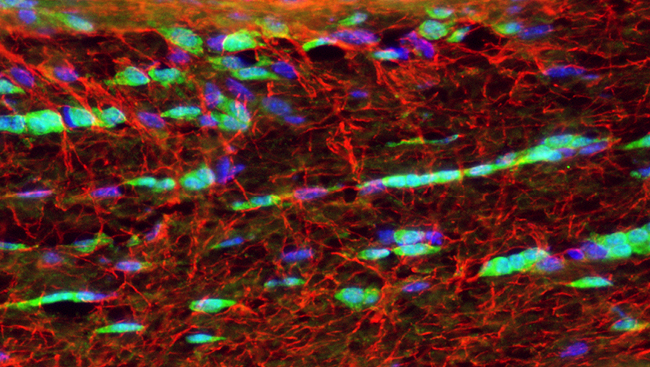 Article Annual Meeting Scientific ResearchGenetic sequencing technologies allow researchers to characterize the diversity of the human genome as well as the causes of many diseases and disorders.Sep 7, 2017
 -
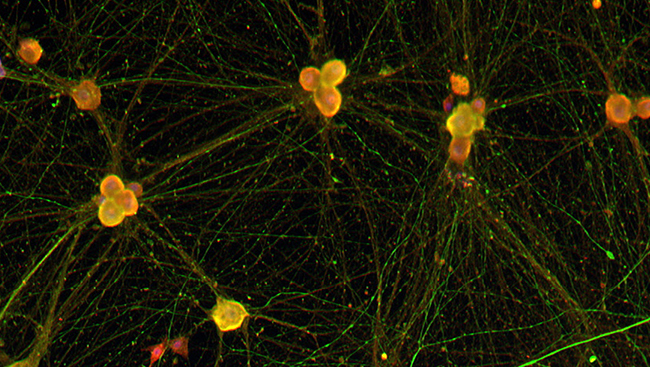 Article Annual Meeting Scientific ResearchDiscovering what cells give rise to others — in other words, tracing cell lineage — has been a goal of biologists for years.Sep 5, 2017
 -
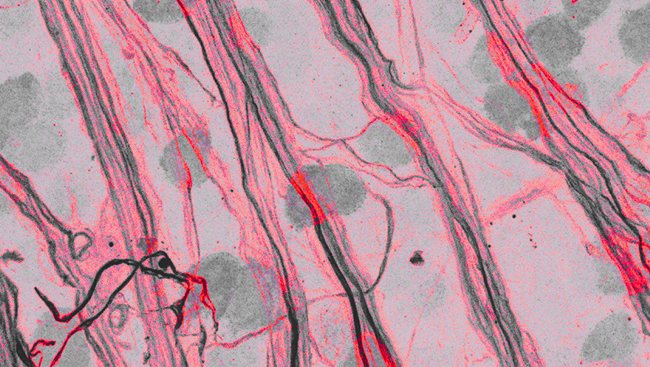 Video TrainingLeah Anderson Roesch’s neuroscience class at Emory University is not just a prerequisite course for her non-neuroscience students. It’s a way to get liberal arts students connected to and excited about the field.Sep 1, 2017
 -
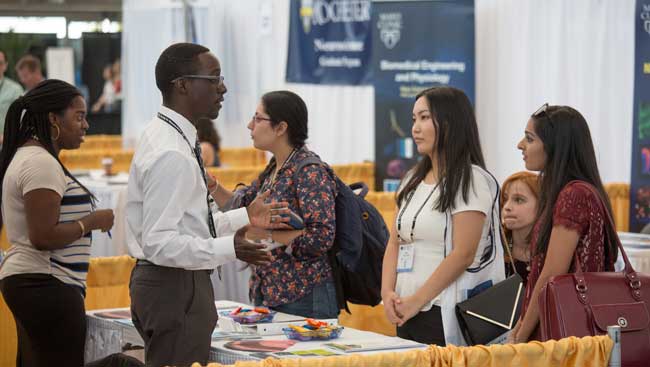 Article Professional DevelopmentIt's important to have mentors who are similar to us and who have had common experiences — people with whom we'll feel comfortable. However, women and minorities (but really anyone) should also reach out to and establish mentoring relationships with men and other ethnic groups. It's also important for everyone to have mentors who are in the positions that you aspire to, no matter their race or gender, because they give you inside information about how to get there and share a perspective about what it's like. It can also be helpful to get a reality check — to hear, "This is what everybody goes through. Your experience is common." As a mentee, I have learned not to judge someone’s background when considering whether they may or may not be an impactful mentor.Aug 30, 2017
 -
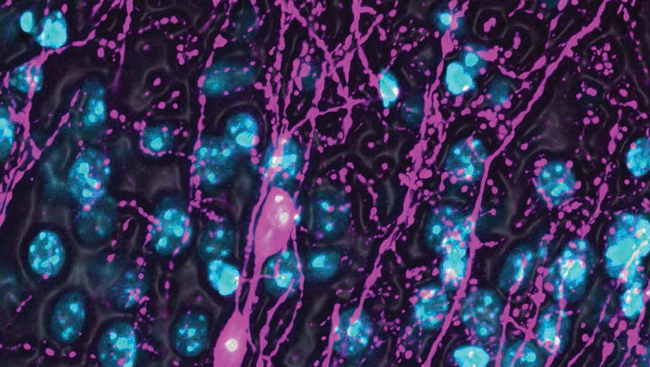 Article Scientific ResearchOur behavior is strongly influenced by the environmental cues around us.Aug 24, 2017
 -
 Journal ArticleHuman face categorization has been extensively studied using event-related potentials (ERPs), positing the N170 ERP component as a robust neural marker of face categorization. Recently, the fast periodic visual stimulation (FPVS) approach relying on steady-state visual evoked potentials (SSVEPs) has also been used to investigate face categorization. FPVS studies consistently report strong bilateral SSVEP face categorization responses over the occipito-temporal cortex, with a right hemispheric dominance, closely mirroring the N170 scalp topography. However, it remains unclear whether SSVEP responses can be considered a proxy for the N170 or are driven by different components. To address this question, we recorded electrophysiological signals from observers viewing face and object images during FPVS and ERP paradigms. We quantified the FPVS response in the frequency domain and extracted ERP components, including the P1, N170, and P2, from both the FPVS time domain and ERP paradigms. Our results revealed litt...Jan 14, 2025




