



Filter
-
(133)
-
(733)
-
(4)
-
(1)
-
(47830)
-
(91)
-
(25)
-
(14)
-
(433)
-
(7)
-
(181)
-
(8)
-
(33)
-
(17)
-
(7)
-
(9)
-
(9)
-
(5)
-
(21)
-
(8)
-
(12)
-
(9)
-
(3)
-
(10)
-
(10)
-
(56)
-
(45)
-
(12)
-
(3)
-
(7)
-
(6)
-
(5)
-
(8)
-
(7)
-
(11)
-
(58)
-
(13)
-
(30)
-
(8)
-
(5)
-
(10)
-
(5)
-
(14)
-
(4)
1411 - 1420
of 52751 results
-
 Journal ArticleMitral and tufted cells in the olfactory bulb (OB) act as an input convergence hub and transmit information to higher olfactory areas. Since first characterized, they have been classed as distinct projection neurons based on size and location: laminarly-arranged mitral cells with a diameter larger than 20μm in the mitral layer (ML), and smaller tufted cells spread across both the ML and external plexiform layer (EPL). Recent in vivo work has shown that these neurons encode complementary olfactory information, akin to parallel channels in other sensory systems. Yet, many ex vivo studies still collapse them into a single class, mitral/tufted, when describing their physiological properties and impact on circuit function. Using immunohistochemistry and whole-cell patch clamp electrophysiology in fixed or acute slices from adult mice, we attempted to align in vivo and ex vivo data and test a soma size-based classifier of OB projection neurons using passive and intrinsic firing properties. We found that there is...Feb 4, 2025
 -
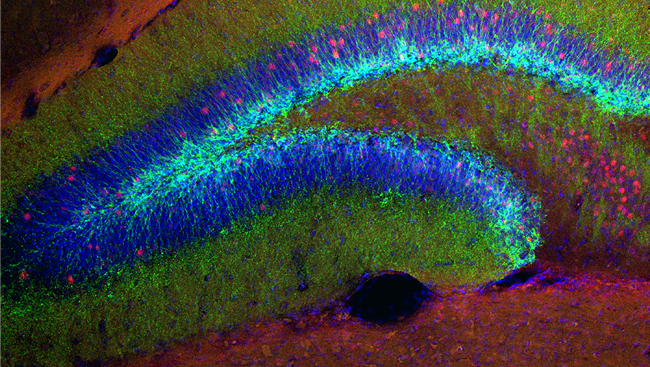 Article Scientific ResearchThe beginning of this century has seen some major advances in light microscopy, particularly related to neuroscience. These developments in microscopy, coupled with techniques that make tissues transparent, are enabling microscopes to visualize the cellular architecture of whole tissues in 3D with unprecedented detail.Dec 26, 2017
 -
Journal ArticleGrowth hormone (GH) is a neuromodulator that binds to receptors in the hippocampus and alters synaptic plasticity. Decline in GH levels is associated with normal ageing, stress and disease, and mechanisms proposed involve the hippocampal circuit plasticity. To see how GH affects the hippocampal neural code, we recorded single neurons in the CA1 region of male Long Evans rats with locally altered GH levels. Rats received injections of adeno-associated viruses into the hippocampus to make the cells overexpress either GH or an antagonizing mutated GH (aGH). Place cells were recorded in both familiar and novel environments to allow the assessment of pattern separation in the neural representations termed remapping. All the animals showed intact and stable place fields in the familiar environment. In the novel environment, aGH transfection increased the average firing rate, peak rate and the information density of the CA1 place fields. The tendency of global remapping increased in the GH animals compared to the...Feb 3, 2025
-
Journal ArticleThe adrenal medulla is packed with chromaffin cells, modified postganglionic sympathetic neurons that secrete the catecholamines, epinephrine and norepinephrine, during the fight-or-flight response. Sometimes overlooked, is a population of immune cells that also resides within the gland but whose distribution and function is not clear. Here I examine the location of CD45+ hematopoietic cells in the mouse adrenal medulla and show the majority are F4/80+/Lyz2+ macrophages. These cells are present from early post-natal development and widely distributed. Anatomically they are associated with chromaffin cells, found aligned alongside synapsin-ir neuronal varicosities and juxtaposed to CD31-ir blood vessels. Using Lyz2cre-GCaMP6f mice to quantify calcium signaling in macrophages revealed these cells respond directly and indirectly to a wide variety of neuromodulators, including pre- and post-ganglionic transmitters and systemic hormones. Purinergic agonists, histamine, acetylcholine and bradykinin rapidly and r...Feb 3, 2025
-
Journal ArticleTransgenic mice provide unprecedented access to manipulate and visualize neural circuits, however, those on a C57BL/6 background develop progressive hearing loss, significantly confounding systems-level and behavioral analysis. While outbreeding can limit hearing loss, it introduces strain variability and complicates the generation of complex genotypes. Here, we propose an approach to preserve hearing by crossing transgenic mice with congenic B6.CAST- Cdh23Ahl+ mice, which maintain low-threshold hearing into adulthood. Widefield and two-photon imaging of the auditory cortex revealed that 2.5-month-old C57BL/6 mice exhibit elevated thresholds to high frequency tones and widespread cortical reorganization, with most neurons responding best to lower frequencies. In contrast, Ahl+ C57BL/6 mice exhibited robust neural responses across tested frequencies and sound levels (4-64 kHz, 30-90 dB SPL) and retained low thresholds into adulthood. Our approach offers a cost-effective solution for generating complex genot...Feb 3, 2025
-
 Article Career PathsSarah Caddick is a trained neuroscientist. After completing her postdoctoral fellowship, she decided not to continue her research and instead pursue a career in philanthropy. Now, Caddick serves as the neuroscience adviser to Lord Sainsbury of Turville and the Gatsby Charitable Foundation. Here she discusses what she learned in her transition to a career away from the bench and the ins and outs of what it’s like to work as a neuroscientist in philanthropy.Dec 20, 2017
 -
 Video DiversityThis is Lesson Four in the Implicit Bias Video Series from BruinX, the research and development unit within the University of California, Los Angeles's Office of Equity, Diversity and Inclusion. This video discusses the differences between explicit and implicit bias.Dec 19, 2017
 -
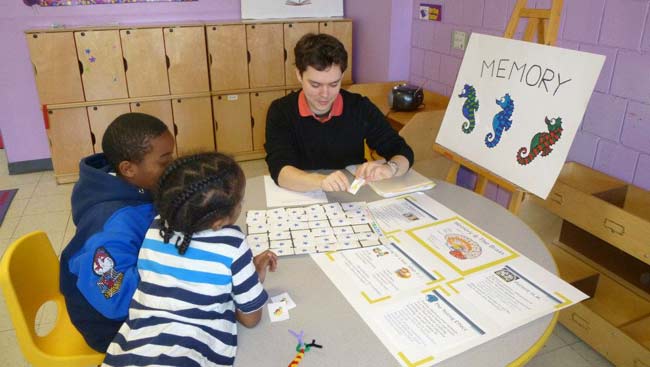 Article OutreachIn addition to sharing research with colleagues, it is important to mentor young scientists and explain the benefits of research with the public. To facilitate these activities, we at Boston College (BC) run the following programs:Dec 18, 2017
 -
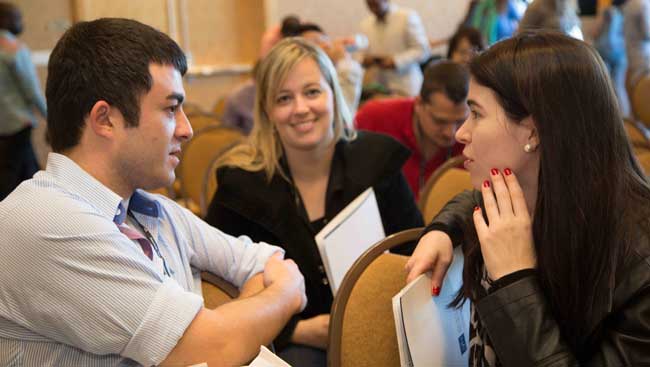 Article Career PathsMelissa Harrington is the interim associate vice president for research, director of the Delaware Center for Neuroscience Research, and professor of biology at Delaware State University (DSU). In My Advice for Finding Mentors, she shared what qualities to look for in potential mentors and how to begin and maintain mentoring relationships. Here, Harrington details her work environment and research approach at DSU, a Historically Black College and University (HBCU) with approximately 4,500 undergraduate and graduate students.Dec 13, 2017
 -
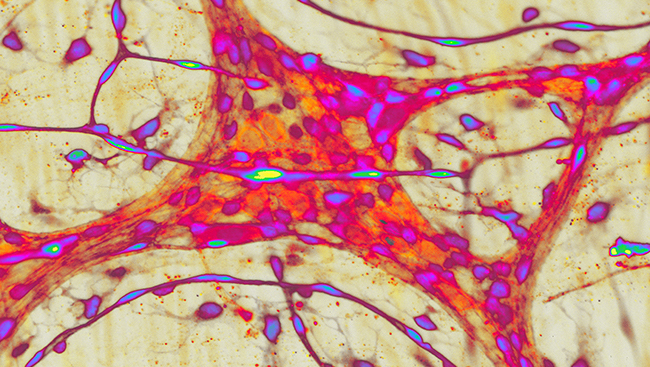 Article Annual Meeting Scientific ResearchMaterial below is adapted from the SfN Short Course, Adult Mouse Cortical Cell Taxonomy Revealed by Single-Cell Transcriptomics, by Bosiljka Tasic, PhD. Short Courses are day-long scientific trainings on emerging neuroscience topics and research techniques held just prior to SfN’s annual meeting. Single-cell RNA sequencing (RNA-seq) is a powerful tool that can help researchers look more deeply at individual cells, in order to better understand differences within tissues or groups of cells. One research team used RNA-seq to classify more than 1,600 cells from the cortex of adult male mice.Dec 12, 2017




