



Filter
-
(133)
-
(733)
-
(4)
-
(1)
-
(47830)
-
(91)
-
(25)
-
(14)
-
(433)
-
(7)
-
(181)
-
(8)
-
(33)
-
(17)
-
(7)
-
(9)
-
(9)
-
(5)
-
(21)
-
(8)
-
(12)
-
(9)
-
(3)
-
(10)
-
(10)
-
(56)
-
(45)
-
(12)
-
(3)
-
(7)
-
(6)
-
(5)
-
(8)
-
(7)
-
(11)
-
(58)
-
(13)
-
(30)
-
(8)
-
(5)
-
(10)
-
(5)
-
(14)
-
(4)
1371 - 1380
of 52751 results
-
 Article Career PathsNo two careers are identical. Yet, all neuroscientists will likely share certain commonalities: the first sparks of scientific curiosity, difficult challenges, resilience to press on, accomplishments large and small, hard-earned wisdom, and support from professional and personal communities. In this series, Notable Careers: Reflections on Science, Leadership, and Community, five neuroscientists reflect on their life’s work and share their hope for the future of the field. Here, Connie Atwell, whose last position was extramural research director at the National Institute of Neurological Disorders and Stroke, focuses on what it was like transitioning from academia to research administration, and why the role was so fulfilling.Mar 16, 2018
 -
 Article Professional DevelopmentNo two careers are identical. Yet, all neuroscientists will likely share certain commonalities: the first sparks of scientific curiosity, difficult challenges, resilience to press on, accomplishments large and small, hard-earned wisdom, and support from professional and personal communities. In this series, Notable Careers: Reflections on Science, Leadership, and Community, five neuroscientists reflect on their life’s work and share their hope for the future of the field. Here, Michael Oberdorfer, whose last position was program director of NIH’s National Eye Institute (NEI) extramural research program, shares his initial childhood curiosity with science and nature, highlights from his training years, what it was like to attend SfN’s first annual meeting, and more. What inspired you to become a neuroscientist? As long as I can remember, even as a little kid, I've been interested in nature. I spent some of my early years in Kensington, Maryland. Our house backed up against a deep woods, and I was always bringing home critters — snakes, frogs, turtles — and it didn’t stop there (it drove my mother crazy).Mar 16, 2018
 -
 Article Professional DevelopmentNo two careers are identical. Yet, all neuroscientists will likely share certain commonalities: the first sparks of scientific curiosity, difficult challenges, resilience to press on, accomplishments large and small, hard-earned wisdom, and support from professional and personal communities. In this series, Notable Careers: Reflections on Science, Leadership, and Community, five neuroscientists reflect on their life’s work and share their hope for the future of the field. Here, Marie-Françoise Chesselet, professor emeritus at the University of California, Los Angeles, focuses on what it was like moving from France (her home country), to pursue science and a life in the United States, why leading large collaborative groups was so valuable to her, and more. What inspired you to become a neuroscientist? I felt neuroscience would be the area of biology in which there would be the most drastic and significant advances in my lifetime. When I started my career, neuroscience was just emerging as a separate science. I was fascinated mostly by mental illness and the potential of neurochemistry to better understand the complexity and diversity of communication processes in the brain to learn how the brain works and dysfunctions.Mar 16, 2018
 -
 Article Professional DevelopmentThese are the stories of five retired neuroscientists who built a life’s work through scientific discovery and personal connection. In this interview series, Connie Atwell, Marie-Françoise Chesselet, Michael Oberdorfer, Osvaldo Uchitel, and James Townsel reflect on how they found their place in and helped grow a developing neuroscience field, what influenced them throughout their career, and what advice they have for neuroscientists at all stages.Mar 16, 2018
 -
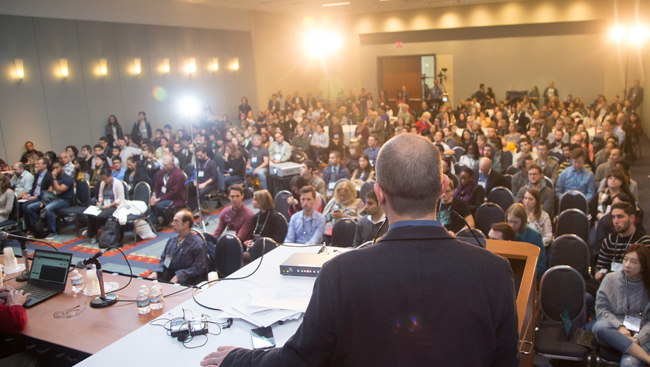 Annual Meeting Video Professional DevelopmentThis workshop introduces three emerging best practices to improve the rigor and reproducibility of neuroscience research: 1. Sample-size planning. 2. Pre-registration. 3. The Teaching Integrity in Empirical Research (TIER) Protocol for conducting reproducible data analysis. Each discussion provides a 30-minute overview of the topic and include resources and tips for advancing towards mastery.Mar 14, 2018
 -
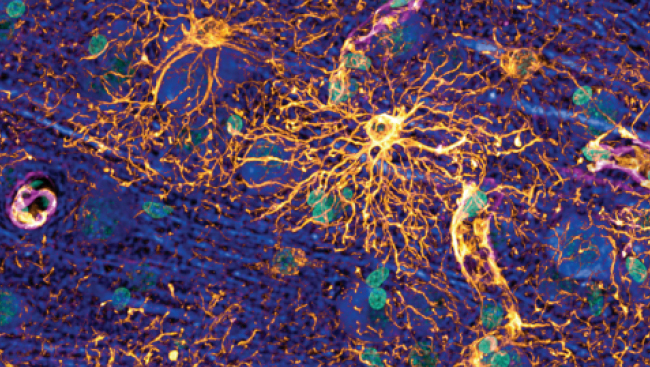 Article Professional DevelopmentBy Stephen J. Morse The discovery of functional magnetic resonance imaging (fMRI) in 1991, which permits non-invasive imaging of brain function, and the wide availability of scanners for research starting in about 2000 fueled claims that what we would learn about the brain and behavior would transform and perhaps revolutionize criminal law. Most commonly, many thought traditional notions of criminal responsibility would be undermined for various reasons, such as demonstrating people really cannot control themselves as well as we believe, or as indicating more action was automatic, thoughtless, and non-rational than we think. Most radically, the neuroexuberants argued that neuroscience shows no one is really responsible because we are not agents — rather, we are victims of neuronal circumstances that mechanistically produce our epiphenomenal thoughts and our bodily movements.Mar 12, 2018
 -
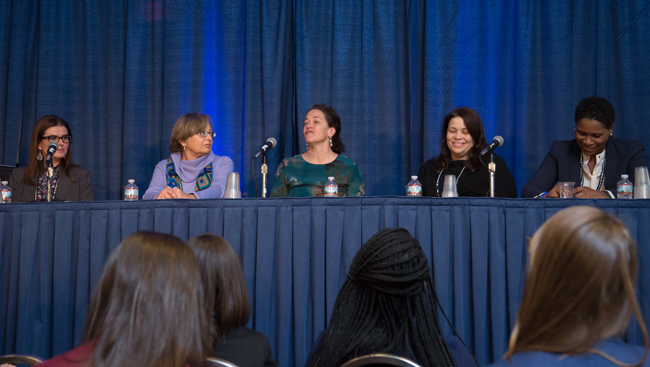 Annual Meeting Video Professional DevelopmentThe Professional Women's Nexus (PWN) addresses several topics relevant to women in the early stages of their scientific career. Hear from a journal editor, an industry associate director of global medical strategic operations, department chair, professor, and two assistant professors. This panel addresses topics such as key components for a successful career path, managing stress, work/life balance, scientific insight, and accurate (self) valuation.Mar 1, 2018
 -
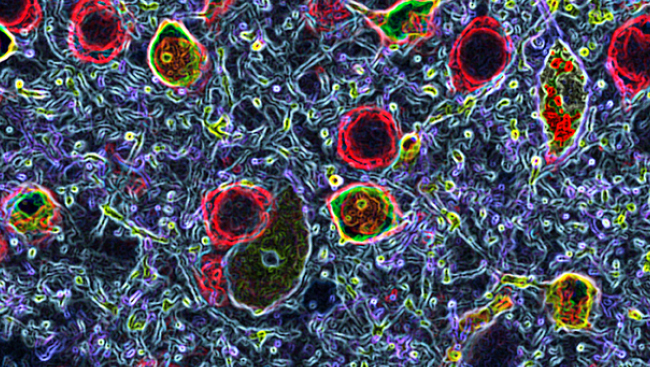 Article Scientific ResearchMaterial below summarizes the article, Sleep Deprivation and Caffeine Treatment Potentiate Photic Resetting of the Master Circadian Clock in a Diurnal Rodent, published on April 19, 2017, in JNeurosci and authored by Pawan Kumar Jha, Hanan Bouâouda, Sylviane Gourmelen, Stephanie Dumont, Fanny Fuchs, Yannick Goumon, Patrice Bourgin, Andries Kalsbeek, and Etienne Challet. The states of being awake and falling asleep are regulated by interaction of wake and sleep promoting areas in the mammalian brain. The master clock in the suprachiasmatic nucleus (SCN) of the hypothalamus provides a temporal pattern of sleep and wake that — like many other behavioral and physiological rhythms — is oppositely phased between nocturnal (night active) and diurnal (day active) animals. The SCN primarily uses environmental light, perceived through the retina, to synchronize endogenous circadian rhythms with the 24-hour light/dark cycle of the outside world. The light responsiveness of SCN is similar in both nocturnal and diurnal species.Mar 1, 2018
 -
 Journal ArticleThe striatum is the primary input nucleus of the basal ganglia, integrating a dense plexus of inputs from the cerebral cortex and thalamus to regulate action selection and learning. Neuroanatomical mapping of the striatum and its sub compartments has been carried out extensively in rats and mice, non-human primates, and cats allowing comparative neuroanatomy studies to derive heuristics about striatal composition and function. Here, we systematically map corticostriatal topography from motor, somatosensory, auditory, and visual cortices as well as thalamostriatal parafascicular (PfN) inputs in the Mongolian Gerbil. We also map a pathway reported in mice from medial vestibular nucleus to the PfN that could convey vestibular information to the striatum. Our findings align with those of similar studies in other rodents, indicating homologous neuroanatomical connectivity patterns within the corticostriatal projectome across rodentia. We observed corticostriatal peaks of dense labeling for each input with a dif...Feb 14, 2025
 -
Journal ArticleRecent findings have shifted the view of cholecystokinin (CCK) from being a cellular neuronal marker to being recognized as a crucial neuropeptide pivotal in synaptic plasticity and memory processes. Despite its now appreciated importance in various brain regions and abundance in the basal ganglia, its role in the striatum, which is vital for motor control, remains unclear. This study sought to fill this gap by performing a comprehensive investigation of the role of CCK in modulating striatal medium spiny neurons (MSN) membrane properties, as well as the secondary somatosensory cortex S2 to MSN synaptic transmission and plasticity in rodents. Using in-vivo optopatch-clamp recording in mice on identified medium spiny neurons (MSNs), we showed that the application of CCK receptor type 2 (CCK2R) antagonists decreases corticostriatal transmission in both direct and indirect pathway MSNs. Moving to an ex vivo rat preparation to maximize experimental access, we showed that CCK2R inhibition impacts MSN membrane p...Feb 14, 2025




