



Filter
-
(133)
-
(733)
-
(4)
-
(1)
-
(47830)
-
(91)
-
(25)
-
(14)
-
(433)
-
(7)
-
(181)
-
(8)
-
(33)
-
(17)
-
(7)
-
(9)
-
(9)
-
(5)
-
(21)
-
(8)
-
(12)
-
(9)
-
(3)
-
(10)
-
(10)
-
(56)
-
(45)
-
(12)
-
(3)
-
(7)
-
(6)
-
(5)
-
(8)
-
(7)
-
(11)
-
(58)
-
(13)
-
(30)
-
(8)
-
(5)
-
(10)
-
(5)
-
(14)
-
(4)
1331 - 1340
of 52751 results
-
 Journal ArticleAniracetam Ameliorates Attention Deficit Hyperactivity Disorder Behavior in Adolescent Mice | eNeuroAttention-deficit/hyperactivity disorder (ADHD) is a neurodevelopmental disorder that affects 8–12% of children globally. Hyperactivity-related behaviors, as well as inattention and impulsivity, are regarded as the nuclear symptoms of ADHD. At present, its etiologies and risk factors are unknown. Previous research linked TARP γ-8 deficiency to ADHD-like behaviors in mice, including hyperactivity, impulsivity, and memory deficits. Aniracetam, a nootropic drug, enhances cognition by modulating cholinergic activity and glutamate receptors, offering neuroprotective effects. This study examined TARP γ-8 knockout (KO) mice at 4 and 8 weeks, assessing behaviors through locomotor activity, cliff avoidance, novel object recognition, and contextual fear conditioning tests. TARP γ-8 KO mice exhibited hyperactivity, reduced recognition memory, and impaired short-term memory and long-term memory. Aniracetam administration improved these behavioral deficits, suggesting its potential as a therapeutic agent for ADHD. The ...Mar 1, 2025
 -
 Journal ArticleNeurons adapt to chronic activity changes by modifying synaptic properties, including neurotransmitter release. However, whether neuropeptide release via dense core vesicles (DCVs)—a distinct regulated secretory pathway—undergoes similar adaptation remains unclear. Here, we demonstrate that 24 h action potential blockade leads to significant DCV accumulation in primary mouse cortical neurons of both sexes. Reactivation with action potential trains induced enhanced Ca2+ influx and 700% more DCV exocytosis compared with control neurons. Notably, total DCV cargo protein levels were unchanged, while mRNA levels of corresponding genes were reduced. Blocking neurotransmitter release with Tetanus toxin induced DCV accumulation, similar to that induced by network silencing with TTX. Hence, chronic network silencing triggers increased DCV accumulation due to reduced exocytosis during silencing. These accumulated DCVs can be released upon reactivation resulting in a massive potentiation of DCV exocytosis, possibly c...Mar 1, 2025
 -
 Journal ArticleThe annual Society for Neuroscience (SfN) meeting is a bonanza of scientific achievement: famous keynote speakers, beautiful scientific results, and award ceremonies. This focus is exciting and invigorating but glosses over the many failures, mistakes, and rejections that typically lead to scientific success. Our goal has been to create a space within the annual SfN meeting for open conversation about scientific failure and, by doing so, increase transparency, resilience, and mental well-being within our community. In this article, we share the materials that we have used at SfN during the past 4 years (2021–2024) to promote discussions of scientific failure, including formal storytelling, individual and interactive games, and confessionals. For each activity, we provide the rationale and practical guidance regarding logistics and usage. We hope this will aid scientists interested in adapting the activities for their own communities or local events. We end with a call for scientific institutions to commit ...Mar 1, 2025
 -
 Journal ArticleCutaneomuscular reflexes (CMRs) can be recorded in the hand muscle of human subjects after stimulation of a digital nerve. We hypothesized that repeated synchronous stimulation of nerves from two digits may lead to long-term plastic changes in CMR, by the mechanisms of spike-timing–dependent plasticity (STDP). To test this idea, we conducted experiments in 27 healthy human volunteers. After baseline measurement of CMR, one of four 30-min-long stimulation conditions were tested; the CMR was then remeasured. The four conditions were simultaneous index finger and thumb stimulation; asynchronous index finger and thumb stimulation; thumb 5 ms before index finger stimulation; and thumb-only stimulation. Neither the early (E1) nor late excitatory (E2) components of the CMR showed consistent changes after any stimulation condition. The inhibitory (I1) component was slightly reduced in all cases. To understand why paired stimulation did not produce long-term changes, we conducted a further experiment. In this, we m...Mar 1, 2025
 -
Journal ArticleIn the article “Comprehensive Characterization of a Subfamily of Ca2+-Binding Proteins in Mouse and Human Retinal Neurons at Single-Cell Resolution” by Jun-Bin Liu, He-Lan Yuan, Gong Zhang, and Jiang-Bin Ke …Mar 1, 2025
-
Journal ArticleEvolutionary pressures adapted insect chemosensation to their respective physiological needs and tasks in their ecological niches. Solitary nocturnal moths rely on their acute olfactory sense to find mates at night. Pheromones are detected with maximized sensitivity and high temporal resolution through mechanisms that are mostly unknown. While the inverse topology of insect olfactory receptors and heteromerization with the olfactory receptor coreceptor suggest ionotropic transduction via odorant-gated receptor–ion channel complexes, contradictory data propose amplifying G-protein–coupled transduction. Here, we used in vivo tip-recordings of pheromone-sensitive sensilla of male Manduca sexta hawkmoths at specific times of day (rest vs activity). Since the olfactory receptor neurons distinguish signal parameters in three consecutive temporal windows of their pheromone response (phasic; tonic; late, long-lasting), respective response parameters were analyzed separately. Disruption of G-protein–coupled transdu...Mar 1, 2025
-
 Journal ArticleSingular strategies for promoting axon regeneration and motor recovery after spinal cord injury (SCI) have been attempted with limited success. For instance, the deletion of RhoA and phosphatase and tensin homolog ( Pten ) (an extrinsic and intrinsic modulating factor, respectively) in corticospinal neurons (CSNs) promotes axon sprouting after thoracic SCI; however, it is unable to restore motor function. Here, we examine the effects of combining RhoA/Pten deletion in CSNs with chemogenetic neuronal stimulation on axonal growth and motor recovery after SCI in mice. We find that this combinatorial approach promotes greater axonal growth and presynaptic bouton formation in CSNs within the spinal cord compared with RhoA ; Pten deletion alone. Furthermore, chemogenetic neuronal stimulation of RhoA ; Pten -deleted CSNs improves forelimb performance in behavioral tasks after SCI compared with RhoA ; Pten deletion alone. These results demonstrate that combination therapies pairing genetic modifications with neuro...Mar 1, 2025
 -
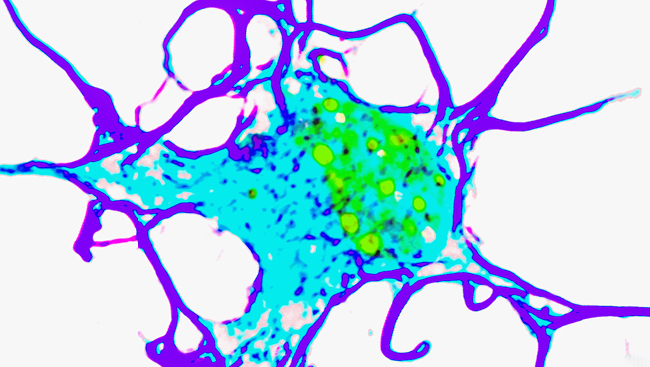 Article Scientific ResearchOrganelles are specialized subcellular structures that serve specific functions in all eukaryotic cells.May 23, 2018
 -
 Annual Meeting Video OutreachNeuroscience research regularly intersects with concepts of human nature, identity, free will, and other philosophical and religious topics. This Neuroscience 2017 Social Issues Roundtable explores paradigms for constructive engagement with diverse and religious audiences. Panelists examine tensions and domains of confluence between scientific and faith perspectives, the underlying values and assumptions in scientific research, and the role of cross-cultural dialogue on science education, practice and policy.May 22, 2018
 -
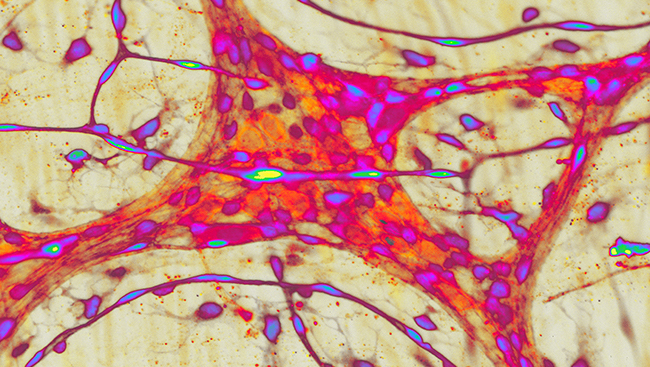 Article Scientific ResearchMaterial below summarizes the article, Working Memory Replay Prioritizes Weakly Attended Events, published on August 14, 2017, in eNeuro and authored by Anna Jafarpour, Will Penny, Gareth Barnes, Robert T. Knight, and Emrah Duzel. Working memory is a system with limited capacity that supports keeping information in mind for a short duration. Two important questions are: One, what are the mechanisms by which information is retained during the gap between encoding and recall (that is, the maintenance period), and two, how is information within working memory prioritized? These are often studied with a cuing procedure in which subjects are prompted to focus on one item. For example, if an event in a sequence of three events is cued, the cued event can be decoded during maintenance. In this study, we investigated how the information about a sequence of multiple events is retained without cueing.May 17, 2018




