



Filter
-
(133)
-
(733)
-
(4)
-
(1)
-
(47830)
-
(91)
-
(25)
-
(14)
-
(433)
-
(7)
-
(181)
-
(8)
-
(33)
-
(17)
-
(7)
-
(9)
-
(9)
-
(5)
-
(21)
-
(8)
-
(12)
-
(9)
-
(3)
-
(10)
-
(10)
-
(56)
-
(45)
-
(12)
-
(3)
-
(7)
-
(6)
-
(5)
-
(8)
-
(7)
-
(11)
-
(58)
-
(13)
-
(30)
-
(8)
-
(5)
-
(10)
-
(5)
-
(14)
-
(4)
1211 - 1220
of 52751 results
-
 Journal ArticlePerceptual decision-making describes the process of selecting an appropriate action based on the sensory information present in the immediate environment and is hence an omnipresent factor in the life of animals. In preclinical research, a widespread approach to study the neuronal correlates of perceptual decision-making is to record (and manipulate) neuronal activity in head-fixed mice performing behavioral tasks. In contrast to the technologies used to record/manipulate neuronal activity, standardization of the behavioral training of mice is generally neglected, a circumstance that is particularly true for behavioral tasks involving auditory stimuli. Here, we present the DMC-Behavior Platform, an open-source, cost-efficient framework for training head-fixed mice in perceptual decision-making tasks involving auditory stimuli. Combining the DMC-Behavior Platform with strategies to record and manipulate neuronal activity offers many opportunities to test hypotheses on the neuronal underpinnings of cognitive...Apr 1, 2025
 -
 Journal ArticleBehavioral and neuroscientific studies have shown that watching a speaker's lip movements aids speech comprehension. Intriguingly, even when videos of speakers are presented silently, various cortical regions track auditory features, such as the envelope. Recently, we demonstrated that eye movements track low-level acoustic information when attentively listening to speech. In this study, we investigated whether ocular speech tracking occurs during visual speech and how it influences cortical silent speech tracking. Furthermore, we compared data from hearing individuals, congenitally deaf individuals, and those who became deaf or hard of hearing (DHH) later in life to assess how audiovisual listening experience and auditory deprivation (early vs late onset) affect neural and ocular speech tracking during silent lip-reading. Using magnetoencephalography (MEG), we examined ocular and neural speech tracking of 75 participants observing silent videos of a speaker played forward and backward. Our main finding is...Apr 1, 2025
 -
 Journal ArticleSynchronous activity of neuronal networks is found in many brain areas and correlates with cognition and behavior. Gamma synchrony is particularly strong in the dentate gyrus, which is thought to process contextual information in the hippocampus. Several network mechanisms for synchrony generation have been proposed and studied computationally. One such mechanism relies solely on recurrent inhibitory interneuron connectivity, but it requires a large enough number of synapses. Here, we incorporate previously published connectivity data of the dentate gyrus from mice of either sex into a biophysical computational model to test its ability to generate synchronous activity. We find that recurrent interneuron connectivity is insufficient to induce synchronous activity. This applies to an interneuron ring network and the broader dentate gyrus circuitry. Despite asynchronous input, recurrent interneuron connectivity can have small synchronizing effects but can also desynchronize the network for some types of syna...Apr 1, 2025
 -
Journal ArticleAttention-deficit/hyperactivity disorder (ADHD) adversely affects the learning, social interaction, and daily living of affected children. Atomoxetine (ATX) hydrochloride (HCI) has been widely used in clinical practice. Electroencephalogram (EEG) biofeedback, as a nonpharmacological treatment approach, has also demonstrated potential in improving symptoms in children with ADHD. We aimed to investigate the clinical efficacy of combining ATX HCI with EEG biofeedback in the treatment of ADHD in children. We hypothesized that this combined therapy would be more effective in alleviating symptoms in children with ADHD. Ninety children with ADHD were randomly separated into the control group (receiving ATX HCI treatment for 12 weeks) and study group (receiving ATX HCI treatment for 12 weeks combined with 60 sessions of EEG biofeedback treatment; n = 45). Swanson, Nolan, and Pelham-IV (SNAP-IV) rating scale scores, integrated visual and auditory continuous performance test results, Conners parent symptom question...Apr 1, 2025
-
 Journal ArticleInvestigation of neural processes underlying motor control requires behavioral readouts that capture the richness of actions, including both categorical (choice-based) information and motor execution (kinematics). We present an open-source platform for behavioral training of head-fixed mice that combines a stationary or retractable forelimb-based joystick, sound-presentation system, capacitive lick sensor, and water reward dispenser. The setup allows for the creation of multiple behavioral paradigms, two of which are highlighted here: a two-alternative forced-choice auditory-motor discrimination paradigm and a two-armed bandit value-based decision-making task. In the auditory-motor paradigm, mice learn to report high- or low-frequency tones by pushing or pulling the joystick. In the value-based paradigm, mice learn to push or pull the joystick based on the history of rewarded trials. In addition to reporting categorical choices, this setup provides a rich dataset of motor parameters that reflect components...Apr 1, 2025
 -
 Journal ArticleThe re-emergence of task-related activation patterns during awake rest has been reported to play a role in memory consolidation and perceptual learning. This study aimed to test whether such reactivation occurs in the primary sensorimotor cortex following a visuomotor task. During functional magnetic resonance imaging (fMRI) scanning, 42 healthy participants (13 women and 29 men) learned visuomotor tracking, while a rotational perturbation was introduced between the cursor position and joystick angle. This visuomotor task block was interleaved with a control block, during which participants passively viewed a replay of their previously performed cursor movements. Half of the participants used their right hand, whereas the other half used their left hand to control the joystick. Resting-state scans were acquired before and after the visuomotor task sessions. A multivariate pattern classifier was trained to classify task and control blocks and was then tested on resting-state scans collected before and after...Apr 1, 2025
 -
 Journal ArticleScientific progress often hinges on the courage to question conventional models and embrace exploratory research. This commentary examines the importance of curiosity-driven science by drawing on historical and contemporary examples, from Darwin's unconventional research methodologies to modern neuroscience investigations that challenge the constraints of traditional laboratory environments. An over-reliance on predictable, controlled conditions—particularly in select rodent models—has potentially limited the translational impact of neuroscience. By exploring novel research paradigms, including raccoon neural investigations and rodent-driven vehicles (ROVs), the value of expanding research models to incorporate diverse species and environments is examined. As neuroscience advances, the field must move beyond the metaphorical lamp post, venturing into uncharted territory to fully capture the complexity of neurobiological variables. By fostering a culture of discovery over predictability—supported by innovat...Apr 1, 2025
 -
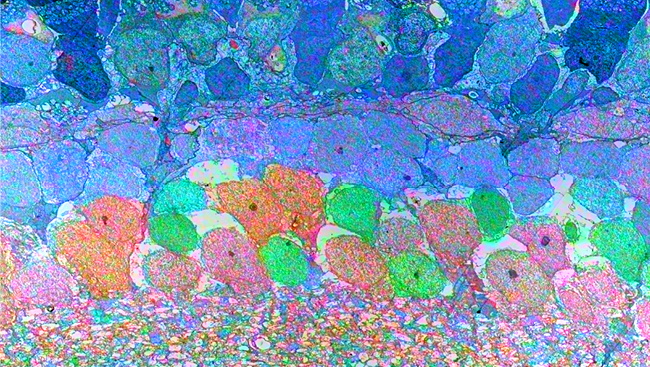 Article Scientific ResearchMaterial below is adapted from the SfN Short Course, Synapse Elimination and Learning Rules Coregulated by Major Histocompatibility Class I Protein H2-Db by Hanmi Lee, PhD, Lowry A. Kirkby, PhD, Barbara K. Brott, PhD, Jaimie D. Adelson, PhD, Sarah Cheng, BS, Marla B. Feller, PhD, Akash Datwani, PhD, and Carla J. Shatz, PhD. Short Courses are day-long scientific trainings on emerging neuroscience topics and research techniques held just prior to SfN’s annual meeting. Major histocompatibility complex class I (MHCI) proteins occur on nearly all vertebrate cells and function as a marquee for the immune system, displaying bits of non-self proteins from the cell’s cytosol on its surface. Now, researchers have shown in mice that a common MCHI protein, H2-Db, is required for shaping the synapses during the development of the retinogeniculate system.Nov 20, 2018
 -
 Article Professional DevelopmentI believe the key to an effective discussion about animal research is authenticity. I learned this firsthand during a lecture I gave at the University of California at Irvine’s Distinctive Voices Series organized by the National Academy of Sciences.Nov 19, 2018
 -
Journal ArticleParkinson’s disease (PD) is a progressive neurodegenerative disorder characterized by motor and non-motor symptoms. Its pathological hallmarks include the accumulation of misfolded alpha-Synuclein (α-Syn) in Lewy bodies (LBs) and Lewy neurites. Phosphorylation of α-Syn is a prominent feature of these inclusions, but its role in disease pathogenesis remains unclear. To identify the role of α-Syn phosphorylation in Synucleinopathy, we generated two Snca knock-in (KI) mouse models carrying phosphomimetic mutations at SncaY39 or SncaS129 ( SncaY39E or SncaS129D ) which manipulated epitopes phosphorylated in PD brain. Both SncaY39E and SncaS129D KI mice displayed increased α-Syn phosphorylation, enhanced oligomer formation, and a shift of α-Syn localization from membrane-bound to cytoplasm. However, neurodegeneration in substantia nigra was not observed up to 24 months of age. These findings demonstrate that mimicking the phosphorylation of Y39 or S129 can induce endogenous α-Syn phosphorylation. Still, a singl...Mar 31, 2025




