



Filter
-
(133)
-
(733)
-
(4)
-
(1)
-
(47830)
-
(91)
-
(25)
-
(14)
-
(433)
-
(7)
-
(181)
-
(8)
-
(33)
-
(17)
-
(7)
-
(9)
-
(9)
-
(5)
-
(21)
-
(8)
-
(12)
-
(9)
-
(3)
-
(10)
-
(10)
-
(56)
-
(45)
-
(12)
-
(3)
-
(7)
-
(6)
-
(5)
-
(8)
-
(7)
-
(11)
-
(58)
-
(13)
-
(30)
-
(8)
-
(5)
-
(10)
-
(5)
-
(14)
-
(4)
1121 - 1130
of 52751 results
-
 Journal ArticleRepetitive transcranial magnetic stimulation (rTMS) is a noninvasive method that has been used to treat various brain disorders. The modulatory effects of rTMS can be adjusted by changing the repetition patterns. Theta-burst magnetic stimulation (TBS) is a magnetic stimulation pattern that can induce long-lasting modulatory effects with a short stimulation period. However, its effects on auditory brain regions remain unclear because of a lack of animal studies in which invasive techniques allow for a detailed exploration of the underlying neural mechanisms. In the current study, we investigated the effects of TBS on the C57BL/6J mouse auditory cortex using a custom-built 7 mm magnetic stimulation coil. Extracellular recordings were made before, during, and after the application of intermittent TBS (iTBS), continuous TBS (cTBS), or sham stimulation. Local field potential amplitudes were increased for 5–20 min post-iTBS compared with the sham condition and were decreased at 10 min post-cTBS compared with the...May 1, 2025
 -
 Journal ArticleThe explore/exploit trade-off is a fundamental property of choice selection during reward-guided decision making, where the “same” choice can reflect either of these internal cognitive states. An unanswered question is whether the execution of a decision provides an underexplored measure of internal cognitive states. Touchscreens are increasingly used across species for cognitive testing and afford the ability to measure the precise location of choice touch responses. We examined how male and female mice in a restless bandit decision making task interacted with a touchscreen to determine if the explore/exploit trade-off, prior reward, and/or sex differences change the variability in the kinetics of touchscreen choices. During exploit states, successive touch responses are closer together than those made in an explore state, suggesting exploit states reflect periods of increased motor stereotypy. Although exploit decisions might be expected to be rewarded more frequently than explore decisions, we find that...May 1, 2025
 -
 Journal ArticleIn the Syngap+/− model of SYNGAP1-related intellectual disability (SRID), excessive neuronal protein synthesis is linked to deficits in synaptic plasticity. Here, we use Translating Ribosome Affinity Purification and RNA-seq (TRAP-seq) to identify mistranslating mRNAs in Syngap+/− CA1 pyramidal neurons that exhibit occluded long-term potentiation (LTP). We find the translation environment is significantly altered in a manner that is distinct from the Fmr1−/y model of fragile X syndrome (FXS), another monogenic model of autism and intellectual disability. The Syngap+/− translatome is enriched for regulators of DNA repair and mimics changes induced with chemical LTP (cLTP) in WT. This includes a striking upregulation in the translation of mRNAs with a longer-length (>2 kb) coding sequence (CDS). In contrast, long CDS transcripts are downregulated with induction of Gp1 metabotropic glutamate receptor-induced long-term depression (mGluR-LTD) in WT, and in the Fmr1−/y model that exhibits occluded mGluR-LTD. Tog...May 1, 2025
 -
 Annual Meeting Video Professional DevelopmentThe most important skill a scientist needs, after the skills needed to execute a study, is the ability to report his or her scientific endeavors in writing. The editors-in-chief of four international neuroscience journals — Brain and Behavior, the European Journal of Neuroscience, the Journal of Neuroscience Research, and Neuroscience, the journal of the International Brain Research Organization — come together in this workshop to offer insight into what editors look for, what their roles are, and what you can to do to make your paper stand out. Watch the recording to learn more about the review process, including why peer review is important, what’s essential to include in your paper, and how to be ethical and ensure reproducibility in your experiments.May 8, 2019
 -
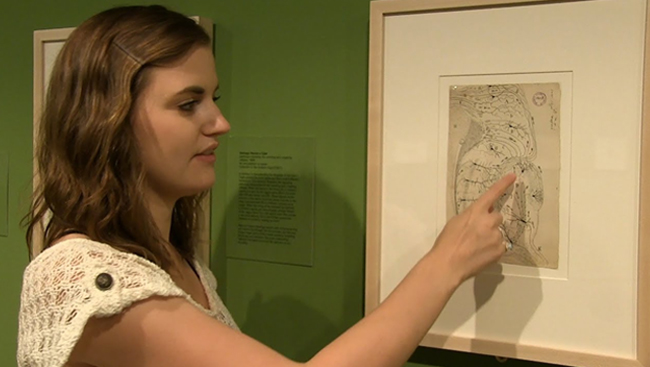 Article OutreachLearn how to make yourself a stronger job candidate, consider career paths you may not have thought of, connect with like-minded scientists, and find work-life balance. In this interview, Samantha Baglot, a PhD student at the University of Calgary, in Canada, shares how she’s pursuing her passion for improving education through neuroscience outreach and project management. What made you want to start doing outreach, and how did you get involved? When I started my master's degree about three years ago, I joined the Neuroscience Graduate Student Association at The University of British Columbia. I was interested in what their vice president of outreach was doing. At the time, she was organizing Vancouver's Brain Bee and Brain Awareness Week events, as well as collaborative events with artists and other communities on campus. I worked with her. Then an opportunity came up for a project where we look at the history of neuroscience through cartoons, and I took the lead on that. I do a lot of delegating, organizing, and recruiting volunteers.May 7, 2019
 -
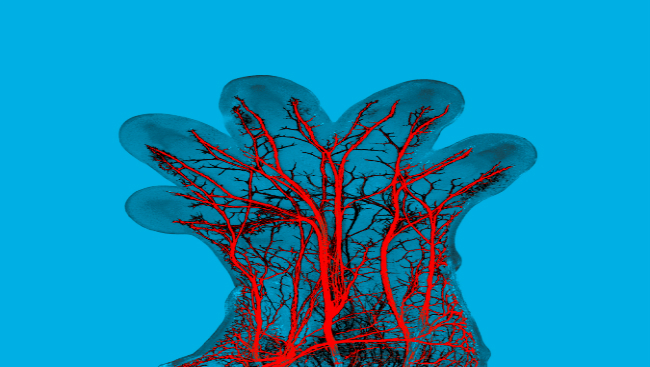 Article Scientific ResearchLive imaging of neuronal populations often reveals a background signal that engulfs the signal from individual neurons. Typically, this background signal is dismissed as uninformative or as an epiphenomenon. We imaged in freely moving mice acetylcholine-releasing (cholinergic) interneurons in the striatum that play a critical role in basal ganglia function and dysfunction in movement disorders. Importantly, these interneurons give rise to a profusely dense neuropil of fine neuronal processes that fill the striatum. Under these circumstances, our analysis revealed the background signal arising from the neuropil represents a “mean-field” readout of the collective recurrent activity of cholinergic interneurons. Thus, the neuropil signal functions as a physiological readout of the network state. For over half a century, clinicians and scientists have known a disruption of the so-called balance between acetylcholine and dopamine released in the region of the brain called the striatum is a central pathological correlate of various movement disorders such as Parkinson’s disease and Huntington’s disease. This imbalance was deduced from biochemical and histological studies of the striatum. However, evidence for such an imbalance in the physiological activity of brain circuits has been lacking.May 1, 2019
 -
 Annual Meeting Video Professional DevelopmentDeveloping strategic research and personal connections — a global network — can help you navigate career transitions and challenges and be successful in your career. In this workshop from Neuroscience 2018, a panel of researchers with experience living and working away from their home countries offered advice for building these culturally based support systems, centered around the four themes below. Read on for highlights and advice, and watch the recording to listen in on this interactive panel discussion.May 1, 2019
 -
 Podcast Scientific ResearchIn the mouse, no complete innate behavioral circuit has been defined, and mechanistic understanding of the neurons that drive behavior remains largely unknown. Lisa Stowers was one of the first postdocs to work with Howard Hughes Medical Institute investigator Catherine Dulac on decoding the mouse olfactory system. In this Meet-the-Expert, she delves into why, 20 years after they began, there’s work left to do, and why innate behavior is not so easy to study as advertised. By watching you’ll gain an understanding of the means and metrics of analysis, assumptions of circuit coding, and interpretations of the effects of viral and optogenetic manipulations, contributing to a greater overall understanding of the coding of innate behavior.Apr 30, 2019
 -
 Article Professional DevelopmentArianna Maffei is an associate professor at Stony Brook University, where she has led an independent research program since 2008. In this interview, she answers some of postdocs’ most common questions at the start of their careers, on topics including finding mentors, applying and interviewing for jobs, and starting a lab.Apr 24, 2019
 -
 Video Annual Meeting AdvocacyOpen communication can help scientists and institutions increase public support for animal research by improving public trust, understanding of the necessity of animal research, and perception of how animal studies are conducted. In this recording of the Animals in Research Panel from Neuroscience 2018, learn effective ways to communicate openly and start positive conversations about animal research. Panelists will share strategies all scientists can use to increase public support in their local communities.Apr 23, 2019




