



Filter
-
(133)
-
(733)
-
(4)
-
(1)
-
(47830)
-
(91)
-
(25)
-
(14)
-
(433)
-
(7)
-
(181)
-
(8)
-
(33)
-
(17)
-
(7)
-
(9)
-
(9)
-
(5)
-
(21)
-
(8)
-
(12)
-
(9)
-
(3)
-
(10)
-
(10)
-
(56)
-
(45)
-
(12)
-
(3)
-
(7)
-
(6)
-
(5)
-
(8)
-
(7)
-
(11)
-
(58)
-
(13)
-
(30)
-
(8)
-
(5)
-
(10)
-
(5)
-
(14)
-
(4)
821 - 830
of 52751 results
-
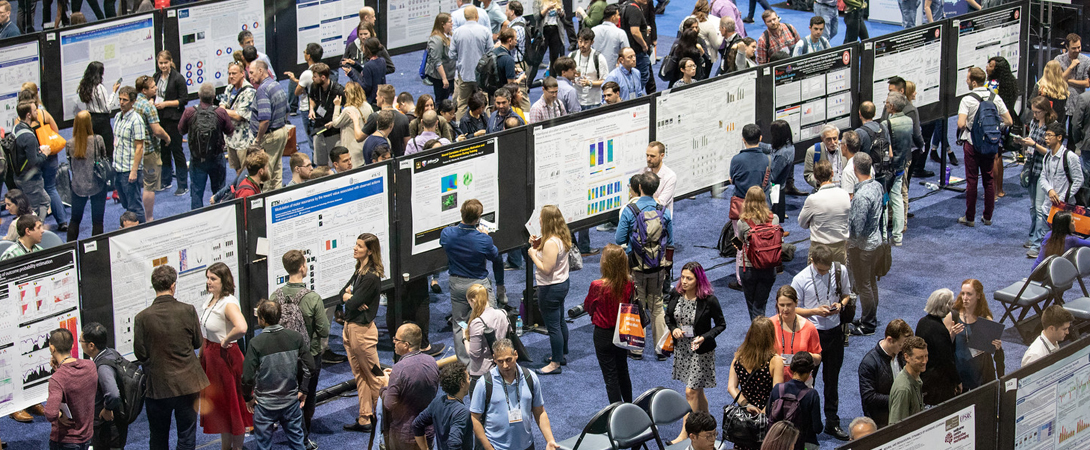 Annual MeetingRevisit SfN annual meeting programming you enjoyed or missed year-round.Sep 18, 2020
 -
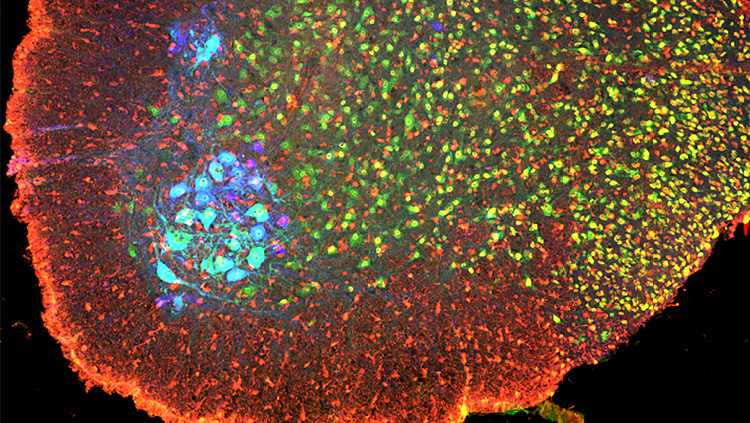 Article Scientific ResearchMaterial below summarizes the article Synaptic Connections of Aromatase Circuits in the Medial Amygdala are Sex Specific, published on May 29, 2020, in eNeuro and authored by Addison Billing, Marcelo Henrique Correia, Diane A. Kelly, Geng-Lin Li, and Joseph Bergan. Highlights Aromatase-producing cells in the mouse medial amygdala receive input originating from sensory cells in the vomeronasal organ that express a single class of receptors known to detect chemicals that convey information about the age, sex, and breeding condition of other mice. We did not observe sex differences in the intrinsic electrophysiological properties of aromatase-producing cells in the medial amygdala; however, we found a robust anatomical sex difference in the number of synapses that connect the accessory olfactory bulb – and thus the vomeronasal organ - to these cells. Males have nearly an order of magnitude more of these synaptic connections than do females, an anatomical difference that could play a role in shaping sex differences in social behaviors mediated by the medial amygdala.Sep 17, 2020
 -
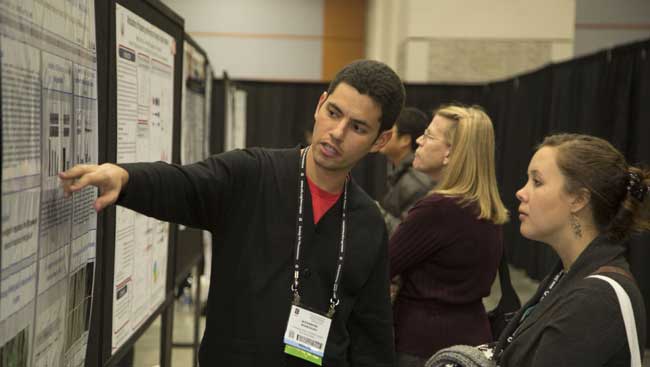 Article Scientific ResearchIn 1971, at the very first plenary session of the newly formed Society for Neuroscience (SfN), Vernon Mountcastle delivered his keynote address as the first SfN president. He took stock of the great achievements of the 1960s, which led to the formation of SfN, and looked forward to how this new group would shape neuroscience and society in the years to come. Now, as we mark the 50th anniversary of the society's founding, SfN's Trainee Advisory Committee (TAC) took on the same task — below and in their Journal of Neuroscience article, The Next 50 Years of Neuroscience — reflecting on a foundation of astounding work and predicting what the next 50 years will hold. Separated by time and space, Mountcastle's words echo in the hearts and minds of the newest generation of scientists.Sep 16, 2020
 -
 Article Career PathsThis resource was featured in the NeuroJobs Career Center. Visit today to search the world’s largest source of neuroscience opportunities. For over 40 years, Nick Ingoglia researched the presence and function of RNA in growing axons. Now retired from a career in neuroscience, Ingoglia has been working toward writing a novel, Madame Lasagna and the Dead Frog, that combines neuroscience research with the fictional lives of a diverse group of characters. In this interview, Ingoglia shares how he incorporates his research experience into his writing, what he hopes audiences take away from his novels, and tips for scientists looking to explore a writing career.Sep 15, 2020
 -
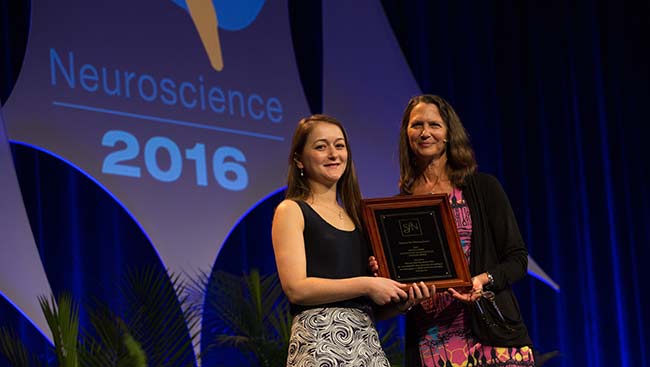 Article Professional DevelopmentUsing molecular, anatomical, and electrophysiological approaches, Sebnem Tuncdemir found that two types of interneurons form transient connections while integrating into their proper positions within the developing brain and that these ephemeral circuits are necessary for the correct assembly of the cerebral cortex. For her outstanding PhD thesis, Tuncdemir won the Nemko Prize in Cellular or Molecular Neuroscience in 2016. Here, she shares more about her research and offers advice for grad students.Sep 10, 2020
 -
 Video CommunityIn this panel discussion, neuroscientists from the United States, South Africa, Korea, Argentina, France, and Croatia share what it will take to counteract bias in their region. The goals of the discussion are to: Determine region-specific challenges in increasing diversity and fighting bias. Identify solutions to these challenges that have been implemented or are being implemented. Share best practices between regions to create a community and move forward as a global initiative. Speakers Keynote speaker: Tracy L. Bale, University of Maryland, USA - IBRO President & Member of the ALBA Board of Directors Africa region: Fleur Howells, University of Cape Town, South Africa Asia/Pacific region: Jinju Han, KAIST, Korea Latin America region: Amaicha Depino, CONICET-University of Buenos Aires, Argentina - Young IBRO Committee member Europe region: Anne Beyeler, University of Bordeaux - INSERM, France - ALBA Ambassador The event was chaired by Zeljka Krsnik, University of Zagreb School of Medicine, Croatia – Young IBRO Committee Chair & Member of the ALBA Board of DirectorsSep 8, 2020
 -
 Journal ArticleDespite the vivid experience of homogeneous vision, our visual system is inherently endowed with highly inhomogeneous structures. Although the temporal characteristics of visual responses vary with eccentricity, the connection between this variation, the speed of visual processing, and its underlying neurophysiological mechanisms remains a topic of debate. Here, we performed simultaneous recordings of high-precision gaze positions and EEG activity to investigate how foveal and perifoveal stimulations impact reaction times (RTs) and visual evoked potentials (VEPs). Volunteers discriminated the position and orientation of a U-shaped figure with the aperture facing either upward or downward. Stimuli were presented briefly (50 ms) either in the foveola (0.33°) or perifovea (6.5°), to the right or left of the fixation point. Stimulus size in the perifovea condition was adjusted according to the cortical magnification factor (stimulus size: 0.2° and 0.75° for the foveola and perifovea conditions, respectively). ...Aug 1, 2025
 -
 Journal ArticleThe interface barrier between the brain surface and the adjacent meninges is important for regulating exchanges of fluid, protein, and immune cells between the CNS and periphery. However, the cell types that form this important interface are not yet fully defined. To address this limitation, we used single-cell RNA sequencing (scRNA-seq) and single-cell spatial transcriptomics together with morphological lineage tracing and immunostaining to describe the cell types forming the interface barrier of the adult murine cortex. We show that the cortical interface is composed of three major cell types, leptomeningeal cells, border astrocytes, and tissue-resident macrophages. On the nonparenchymal side, the interface is composed of transcriptionally distinct PDGFRα-positive leptomeningeal cells that are intermingled with macrophages. This leptomeningeal layer is lined by a population of transcriptionally distinct border astrocytes. The interface neighborhood is rich in growth factor mRNAs, including many leptomeni...Aug 1, 2025
 -
 Journal ArticleIn the article “A Preprocessing Toolbox for 2-Photon Subcellular Calcium Imaging,” by Anqi Jiang, Chong Zhao, and Mark E. J. …Aug 1, 2025
 -
Journal ArticleThe degeneration of midbrain dopamine (DA) neurons disrupts the neural control of natural behavior, such as walking, posture, and gait in Parkinson's disease. While some aspects of motor symptoms can be managed by DA replacement therapies, others respond poorly. Recent advancements in machine learning-based technologies offer opportunities to better understand the organizing principles of behavior modules at fine timescales and its dependence on dopaminergic modulation. In the present study, we applied the motion sequencing (MoSeq) platform to study the spontaneous locomotor activities of neurotoxin and genetic mouse models of parkinsonism as the midbrain DA neurons progressively degenerate. We also evaluated the treatment efficacy of levodopa (l-DOPA) on behavioral modules at fine timescales. We revealed robust changes in the kinematics and usage of the behavioral modules that encode spontaneous locomotor activity. Further analysis demonstrates that fast behavioral modules with higher velocities were more...Aug 1, 2025




