



Filter
-
(133)
-
(733)
-
(4)
-
(1)
-
(47833)
-
(91)
-
(25)
-
(14)
-
(433)
-
(7)
-
(181)
-
(8)
-
(33)
-
(17)
-
(7)
-
(9)
-
(9)
-
(5)
-
(21)
-
(8)
-
(12)
-
(9)
-
(3)
-
(10)
-
(10)
-
(56)
-
(45)
-
(12)
-
(3)
-
(7)
-
(6)
-
(5)
-
(8)
-
(7)
-
(11)
-
(58)
-
(13)
-
(30)
-
(8)
-
(5)
-
(10)
-
(5)
-
(14)
-
(4)
1451 - 1460
of 52754 results
-
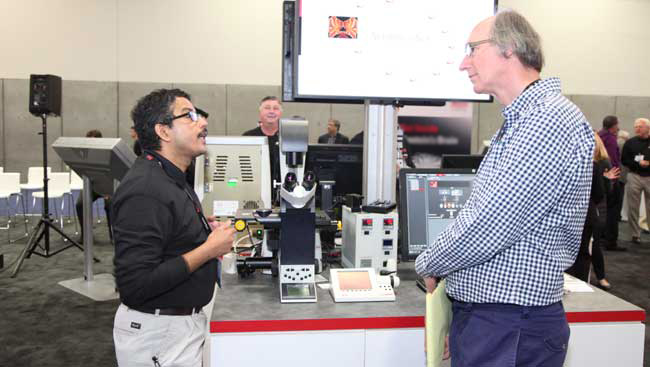 Article Career PathsAs Khan Ozol, the global head of talent scouting at Novartis, was completing his postdoc about cell transplantation and gene therapy for delivering trophic factors to the brain, he realized that he wanted to pursue a different path: an entrepreneurial career, but still focused on science.Nov 29, 2017
 -
 Video DiversityThis is Lesson Three in the Implicit Bias Video Series from BruinX, the research and development unit within the University of California, Los Angeles's Office of Equity, Diversity and Inclusion. This video explores findings that implicit biases can influence our real world behavior.Nov 28, 2017
 -
 Journal ArticleThe amygdala is believed to make invaluable contributions to visual emotion processing. Yet how this subcortical body contributes to emotion perception across time is contended. Here, we measured differences in the perceptual processing of emotional stimuli after unilateral temporal lobe and amygdala resection (TLR) in humans, using EEG. Through mass univariate analysis of brain activity, we compared responses to fearful and neutral faces (left TLR N = 8, right TLR N = 8, control N = 8), and fearful and neutral bodies (left TLR N = 9, right TLR N = 9, control N = 9). We found that TLR impaired the early-stage perceptual processing of emotional stimuli seen in the control group. Indeed, in controls a heightened responses to fearful faces was found in the 140-170 ms time window, over temporo-parietal electrodes. This effect was also present in the left TLR group but disappeared in the right TLR group. For emotional bodies, brain activity was differentially sensitive to fearful stimuli at 90-120 ms in the con...Jan 31, 2025
 -
Journal ArticleBreathing is a complex neuromuscular process vital to sustain life. In pre-clinical animal models, the study of respiratory motor control is primarily accomplished through neurophysiologic recordings and functional measurements of respiratory output. Neurophysiologic recordings that target neural or muscular output via direct nerve recordings or respiratory muscle electromyography (EMG) are commonly collected during anesthetized conditions. While offering tight control of experimental preparations, the use of anesthesia results in respiratory depression, may impact cardiovascular control, eliminates the potential to record volitional non-ventilatory behaviors, and can limit translation. Since the diaphragm is a unique muscle which is rhythmically active and difficult to access, placing diaphragm EMGs to collect chronic recordings in awake animals is technically challenging. Here, we describe methods for fabricating and implanting indwelling diaphragm EMG electrodes to enable recordings from awake rodents f...Jan 31, 2025
-
 Article TrainingIan Paul and Alan Sved discuss how faculty can create effective and measurable goals and objectives for students enrolled in an interdisciplinary program.Nov 21, 2017
 -
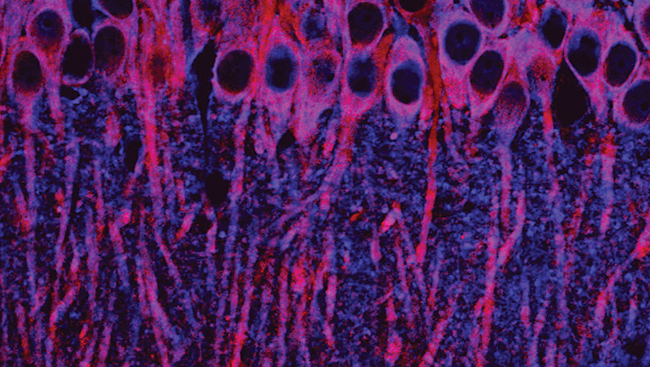 Article Scientific ResearchMany people chronically suffer from sleep disorders that hinder daily functioning and adversely affect health and longevity. Despite the discovery of some basic neurobiological concepts, the cellular and molecular mechanisms involved in sleep promotion and in the coordinated succession of behavioral states remain largely unknown and are the subject of intense research.Nov 21, 2017
 -
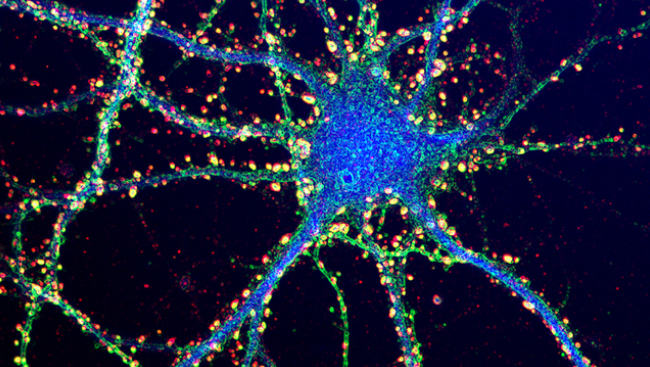 Webinar Professional DevelopmentThis webinar will provide scientists with information about how to develop precise and effective significance statements to accompany their work. These statements are increasingly being used by agencies reviewing science for funding opportunities, editorial reviewers for publication in scientific journals, and the media. The goal of this webinar is to inform the neuroscience community about the benefits of creating a significance statement in a way that peaks the interest of others in the field, as well as laypersons, which can lead to opportunities for published research and/or funding.Nov 14, 2017
 -
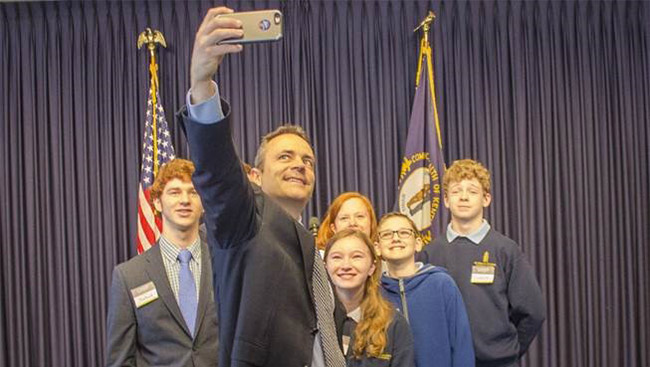 Article OutreachAs my research in graduate school has developed, it has become clear how important federal and state funding is to my future.Nov 14, 2017
 -
Journal ArticleEvolutionary pressures adapted insect chemosensation to the respective insect’s physiological needs and tasks in their ecological niches. Solitary nocturnal moths rely on their acute olfactory sense to find mates at night. Pheromones are detected with maximized sensitivity and high temporal resolution through mechanisms that are mostly unknown. While the inverse topology of insect olfactory receptors and heteromerization with the coreceptor Orco suggest ionotropic transduction via odorant-gated receptor-ion channel complexes, contradictory data propose amplifying G protein-coupled transduction. Here, we used in vivo tip-recordings of pheromone-sensitive sensilla of male Manduca sexta hawkmoths at specific times of day (rest vs. activity). Since the olfactory receptor neurons distinguish signal parameters in three consecutive temporal windows of their pheromone response (phasic; tonic; late, long-lasting), respective response parameters were analyzed separately. Disruption of G protein-coupled transduction ...Jan 29, 2025
-
Journal ArticleHearing impairment (HI) disrupts social interaction by hindering the ability to follow conversations in noisy environments. While hearing aids (HAs) with noise reduction (NR) partially address this, the “cocktailparty problem” persists, where individuals struggle to attend to specific voices amidst background noise. This study investigated how NR and an advanced signal processing method for compensating for nonlinearities in EEG signals can improve neural speech processing in HI listeners. Participants wore hearing aids with NR, either activated or deactivated, while focusing on target speech amidst competing masker speech and background noise. Analysis focused on temporal response functions to assess neural tracking of relevant target and masker speech. Results revealed enhanced neural responses (N1 and P2) to target speech, particularly in frontal and central scalp regions, when NR was activated. Additionally, a novel method compensated for nonlinearities in EEG data, leading to improved signal-to-noise ...Jan 29, 2025




