



Filter
-
(133)
-
(733)
-
(4)
-
(1)
-
(47832)
-
(91)
-
(25)
-
(14)
-
(433)
-
(7)
-
(181)
-
(8)
-
(33)
-
(17)
-
(7)
-
(9)
-
(9)
-
(5)
-
(21)
-
(8)
-
(12)
-
(9)
-
(3)
-
(10)
-
(10)
-
(56)
-
(45)
-
(12)
-
(3)
-
(7)
-
(6)
-
(5)
-
(8)
-
(7)
-
(11)
-
(58)
-
(13)
-
(30)
-
(8)
-
(5)
-
(10)
-
(5)
-
(14)
-
(4)
1231 - 1240
of 52753 results
-
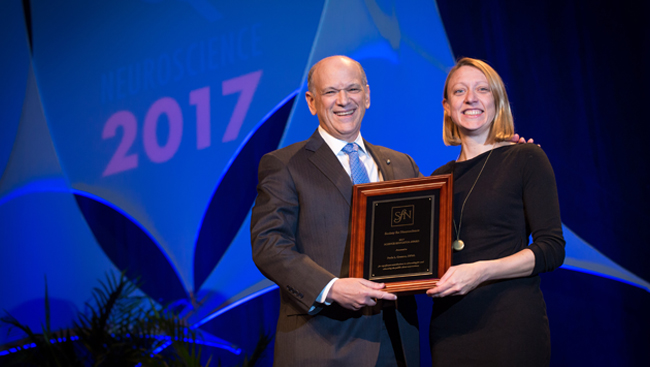 Article OutreachScience shapes all of our lives and Paula Croxson frequently shares how with many distinct audiences. She is the New York producer of The Story Collider, which features true, personal stories about science through live performances and a podcast. Croxson is a group leader of NeuWrite, an online collaboration space for writers, artists, radio producers, filmmakers, and scientists. Additionally, she blogs for Psychology Today and has presented at comedy shows, festivals, and other events. For creativity in science communication, she won the Science Educator and Outreach Award in 2017. Here, she talks about her passion for storytelling and approaches to build narratives that resonate. Where did your passion for scientific storytelling originate? I told my first story for The Story Collider as part of a Brain Awareness Week show in 2012. It was about my grandmother, who had Alzheimer’s disease. I initially thought I didn’t have anything worth sharing. I thought to myself, “Well, everyone knows someone with Alzheimer’s disease. There isn’t anything special about my story.” Even after I had worked on the story, weaving in my own work in memory research, I was convinced no one would care. During the performance, the lights were so bright I couldn’t see the audience’s reaction, so it wasn’t until I got down from the stage, shaking and feeling incredibly relieved, that I realized the impact of my words. With tears in their eyes, strangers asked to hug me and thanked me for sharing my experience. Suddenly, I got it.Oct 17, 2018
 -
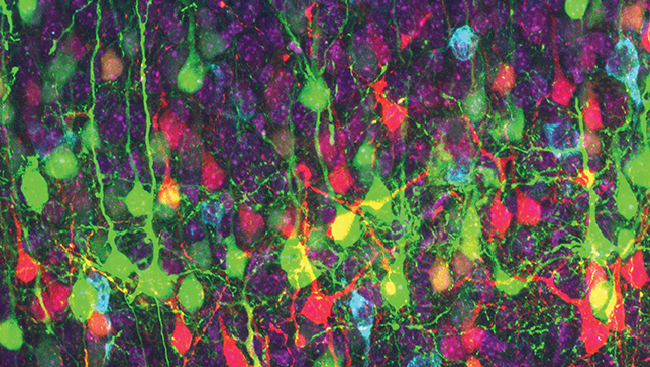 Article Scientific ResearchMicroglia — the macrophages of the central nervous system (CNS) — not only perform immune functions, but also sculpt the brain. They regulate neuronal development, play roles in plasticity and neurodegeneration, and prune synapses. Understanding how these cells function has helped researchers better understand how synapses can change during disease and may even lead to new therapies. Researchers now know that microglia differ from macrophages in other tissues, in that they perform specialized CNS-related functions. But within microglia, many different transcriptional profiles exist that depend upon sex, cellular age, development, brain location, and the resident bacteria of the gut and likely reflect each cell’s specialized function. Studies that provide a more in depth look a microglia profiles will help illuminate their plasticity and many functions.Oct 10, 2018
 -
 Article Professional DevelopmentThe goal of any scientific presentation is to connect with your audience. What should you do before and during your talk to ensure that happens and you feel comfortable and enjoy the process? Following common guiding principles, such as knowing your audience and rehearsing ahead of time, will help you craft and deliver engaging messages. To help you design an impactful talk, SfN has created a toolkit on the three overarching elements of successful science presentations: structure/narrative, visual aids, and delivery.Oct 9, 2018
 -
 Article Professional DevelopmentIn the last few decades, there has been an increasing push towards making science more participatory by engaging those who are part of or invested in the community that will be impacted by the research in the actual research process, from determining the questions that are worth asking, to contributing to experimental design, to communicating findings to the public.Oct 9, 2018
 -
 Webinar Professional DevelopmentFrom a panel of experts, get tips on how to identify the right grant mechanism for your career stage and who to contact for help, and understand how your application will be reviewed and how NIH Institutes finalize funding decisions. You will also hear helpful suggestions to maximize your chances for writing a successful application.Oct 8, 2018
 -
 Journal ArticleHuman motor skill acquisition is improved by performance feedback and coupling such feedback with extrinsic reward (such as money) can enhance skill learning. However, the neurophysiology underlying such behavioral effect is unclear. To bridge this gap, we assessed the effects of reward on multiple forms of motor plasticity during skill learning. Sixty-five healthy participants divided in three groups performed a pinch-grip skill task with sensory feedback only, sensory and reinforcement feedback or both feedback coupled with an extrinsic monetary reward during skill training. To probe motor plasticity, we applied transcranial magnetic stimulation at rest, on the left primary motor cortex before, at an early training time-point and after training in the three groups and measured Motor Evoked Potentials from task relevant muscle of the right arm. This allowed us to evaluate the amplitude and variability of corticospinal output, GABA-ergic short-intracortical inhibition and use-dependent plasticity before tr...Mar 26, 2025
 -
 Article Professional DevelopmentIf you plan to pursue a graduate degree, consider the ways you can differentiate yourself, as suggested by neuroscience program faculty.Sep 27, 2018
 -
Journal ArticleAuditory masking—the interference of the encoding and processing of an acoustic stimulus imposed by one or more competing stimuli—is nearly omnipresent in daily life, and presents a critical barrier to many listeners, including people with hearing loss, users of hearing aids and cochlear implants, and people with auditory processing disorders. The perceptual aspects of masking have been actively studied for several decades, and particular emphasis has been placed on masking of speech by other speech sounds. The neural effects of such masking, especially at the subcortical level, have been much less studied, in large part due to the technical limitations of making such measurements. Recent work has allowed estimation of the auditory brainstem response (ABR), whose characteristic waves are linked to specific subcortical areas, to naturalistic speech. In this study, we used those techniques to measure the encoding of speech stimuli that were masked by one or more simultaneous other speech stimuli. We presente...Mar 24, 2025
-
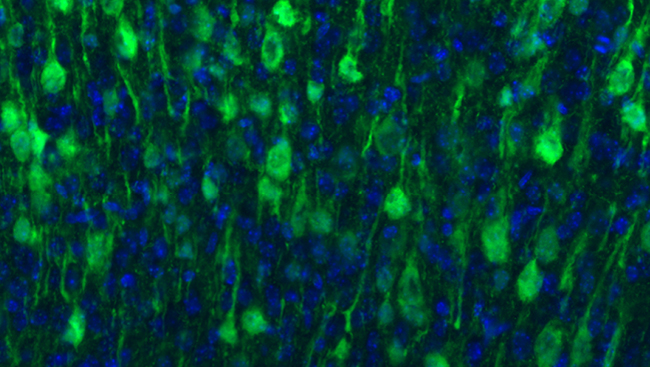 Article Scientific ResearchMaterial below summarizes the article, Phosphoinositol-4,5-bisphosphate Regulates Auditory Hair Cell Mechanotransduction Channel Pore Properties and Fast Adaptation, published on October 24, 2017, in JNeurosci and authored by Thomas Effertz, Lars Becker, Anthony W. Peng, and Anthony J. Ricci. In vertebrates, sound is detected by the organ of Corti, a sensory epithelium located inside the cochlea, the snail shell shaped part of our inner ear. The organ of Corti comprises one row of inner hair cells (IHC), which function as microphones, and three rows of outer hair cells (OHC), which function as amplifiers of faint sound stimuli. Both IHCs and OHCs possess a sensory organelle, termed hair bundle, on their apical surface that consists of multiple rows of actin-filled stereocilia. The stereocilia are arranged in a staircase pattern, with each shorter stereocilium connected to its taller neighbor at the tips through filaments, termed tip links. Sound stimulation ultimately leads to fluid motions inside of the cochlea that result in hair bundle deflection. Deflections towards the tallest stereocilia row cause tip links to pull at the tips of each shorter stereocilium. Those pulls directly open mechano-electrical transduction (MET) channels, which allow inflow of cations and thus the translation of mechanical stimuli into electro-/chemical cell signals.Sep 26, 2018
 -
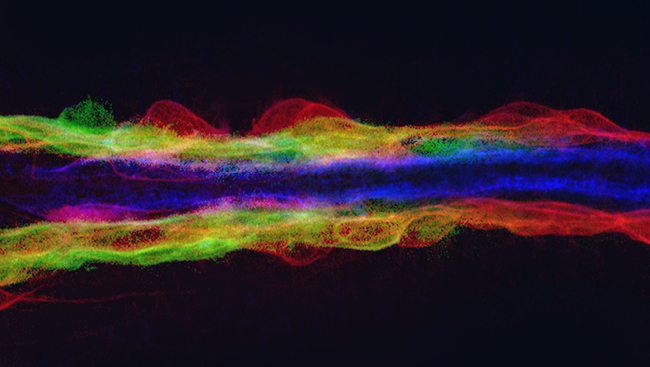 Article Scientific ResearchMaterial below summarizes the article, Basolateral Amygdala Neurons Maintain Aversive Emotional Salience, published on March 21, 2018, in JNeurosci and authored by Auntora Sengupta, Joanna O.Y. Yau, Philip Jean-Richard Dit Bressel, Yu Liu, Zayra E. Millan, John M. Power, and Gavan P. McNally. The ability to learn about and respond to sources of danger is essential to survival. A variety of lines of evidence, ranging from single-unit recording studies in rodents to functional neuroimaging or neuropsychological studies in humans, show the amygdala is critical for this learning. Fear learning can be studied in laboratory animals using Pavlovian fear conditioning. The experimenter arranges a conditioned stimulus (CS) (e.g., an auditory stimulus) to signal delivery of an aversive event (e.g., shock to the paws). The consequence of these pairings is the animal will show fear responses to the CS when it’s subsequently encountered. This fear learning is readily acquired, often within a few trials, and it persists for a long time. Despite this procedural simplicity, fear learning is not a simple process. It involves complex psychological processes of attention, stimulus selection, error-detection, and stimulus processing.Sep 20, 2018




