



Filter
-
(133)
-
(733)
-
(4)
-
(1)
-
(47830)
-
(91)
-
(25)
-
(14)
-
(433)
-
(7)
-
(181)
-
(8)
-
(33)
-
(17)
-
(7)
-
(9)
-
(9)
-
(5)
-
(21)
-
(8)
-
(12)
-
(9)
-
(3)
-
(10)
-
(10)
-
(56)
-
(45)
-
(12)
-
(3)
-
(7)
-
(6)
-
(5)
-
(8)
-
(7)
-
(11)
-
(58)
-
(13)
-
(30)
-
(8)
-
(5)
-
(10)
-
(5)
-
(14)
-
(4)
1121 - 1130
of 52751 results
-
 Journal ArticlePavlovian conditioning tasks have been used to identify the neural systems involved with learning cue–outcome relationships. In delay conditioning, the conditioned stimulus (CS) overlaps or co-terminates with the unconditioned stimulus (US). Prior studies demonstrate that dopamine in the nucleus accumbens (NAc) regulates behavioral responding during delay conditioning. Furthermore, the dopamine response to the CS reflects the relative value of the upcoming reward in these tasks. In contrast to delay conditioning, trace conditioning involves a “trace” period separating the end of the CS and the US delivery. While dopamine has been implicated in trace conditioning, no studies have examined how NAc dopamine responds to reward-related stimuli in these tasks. Here, we developed a within-subject trace conditioning task where distinct CSs signaled either a short trace period (5 s) or a long trace period (55 s) prior to food reward delivery. Male rats exhibited greater conditioned responding and a faster response ...May 1, 2025
 -
 Journal ArticleHistone deacetylase 3 (HDAC3) is one of the most highly expressed HDACs in the brain shown to be a negative regulator of long-term memory formation. HDAC3 has also been shown to be involved in cocaine-associated behaviors, demonstrated by manipulations in the nucleus accumbens. Previous studies have demonstrated that expression of a dominant negative of a key HDAC3 target gene, nuclear receptor subfamily 4 group A member 2 (NR4A2), in cholinergic neurons of the medial habenula (MHb) blocked reinstatement of cocaine-induced conditioned place preference (CPP) as well as cue-induced intravenous self-administration (IVSA). Together, these findings suggested that HDAC3 would also be important for MHb-dependent reinstatement of CPP and IVSA, which we examined in this study. Contrary to our hypothesis, our results found that expression of an HDAC3 deacetylase dead point mutant within the cholinergic neurons of the mouse MHb had no effect on reinstatement or other cocaine-induced behaviors.May 1, 2025
 -
 Journal ArticleDistinct frontal regions make dissociable contributions to rule-guided decision-making, including the ability to learn and exploit associations between abstract rules and reward value, maintain those rules in memory, and evaluate choice outcomes. Value-based learning can be quantified using reinforcement learning (RL) models predicting optimal trial-wise choices and estimating learning rates, which can then be related to the intact functioning of specific brain areas by combining a modeling approach with lesion-behavioral data. We applied a three-parameter feedback-dependent RL model to behavioral data obtained from macaques with circumscribed lesions to the principal sulcus (PS), anterior cingulate cortex (ACC), orbitofrontal cortex (OFC), superior dorsolateral prefrontal cortex (sdlPFC), and frontopolar cortex (FPC) performing a Wisconsin card sorting task (WCST) analog. Our modeling-based approach identified distinct lesion effects on component cognitive mechanisms contributing to WCST performance. OFC ...May 1, 2025
 -
 Annual Meeting Video Professional DevelopmentThe most important skill a scientist needs, after the skills needed to execute a study, is the ability to report his or her scientific endeavors in writing. The editors-in-chief of four international neuroscience journals — Brain and Behavior, the European Journal of Neuroscience, the Journal of Neuroscience Research, and Neuroscience, the journal of the International Brain Research Organization — come together in this workshop to offer insight into what editors look for, what their roles are, and what you can to do to make your paper stand out. Watch the recording to learn more about the review process, including why peer review is important, what’s essential to include in your paper, and how to be ethical and ensure reproducibility in your experiments.May 8, 2019
 -
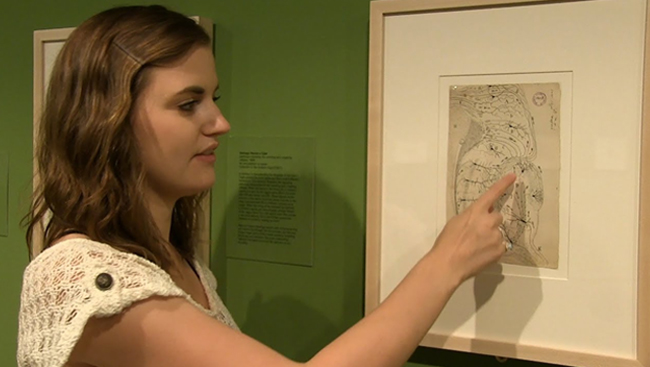 Article OutreachLearn how to make yourself a stronger job candidate, consider career paths you may not have thought of, connect with like-minded scientists, and find work-life balance. In this interview, Samantha Baglot, a PhD student at the University of Calgary, in Canada, shares how she’s pursuing her passion for improving education through neuroscience outreach and project management. What made you want to start doing outreach, and how did you get involved? When I started my master's degree about three years ago, I joined the Neuroscience Graduate Student Association at The University of British Columbia. I was interested in what their vice president of outreach was doing. At the time, she was organizing Vancouver's Brain Bee and Brain Awareness Week events, as well as collaborative events with artists and other communities on campus. I worked with her. Then an opportunity came up for a project where we look at the history of neuroscience through cartoons, and I took the lead on that. I do a lot of delegating, organizing, and recruiting volunteers.May 7, 2019
 -
 Annual Meeting Video Professional DevelopmentDeveloping strategic research and personal connections — a global network — can help you navigate career transitions and challenges and be successful in your career. In this workshop from Neuroscience 2018, a panel of researchers with experience living and working away from their home countries offered advice for building these culturally based support systems, centered around the four themes below. Read on for highlights and advice, and watch the recording to listen in on this interactive panel discussion.May 1, 2019
 -
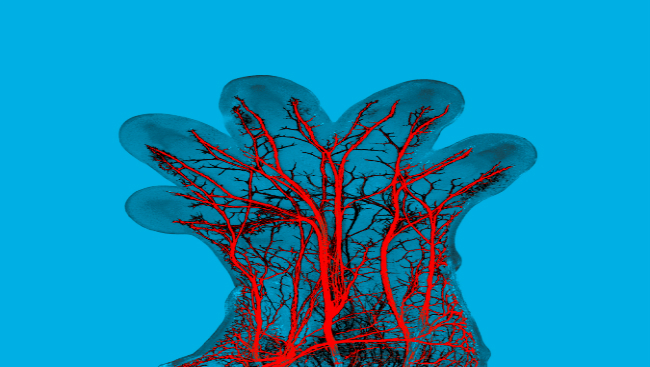 Article Scientific ResearchLive imaging of neuronal populations often reveals a background signal that engulfs the signal from individual neurons. Typically, this background signal is dismissed as uninformative or as an epiphenomenon. We imaged in freely moving mice acetylcholine-releasing (cholinergic) interneurons in the striatum that play a critical role in basal ganglia function and dysfunction in movement disorders. Importantly, these interneurons give rise to a profusely dense neuropil of fine neuronal processes that fill the striatum. Under these circumstances, our analysis revealed the background signal arising from the neuropil represents a “mean-field” readout of the collective recurrent activity of cholinergic interneurons. Thus, the neuropil signal functions as a physiological readout of the network state. For over half a century, clinicians and scientists have known a disruption of the so-called balance between acetylcholine and dopamine released in the region of the brain called the striatum is a central pathological correlate of various movement disorders such as Parkinson’s disease and Huntington’s disease. This imbalance was deduced from biochemical and histological studies of the striatum. However, evidence for such an imbalance in the physiological activity of brain circuits has been lacking.May 1, 2019
 -
 Podcast Scientific ResearchIn the mouse, no complete innate behavioral circuit has been defined, and mechanistic understanding of the neurons that drive behavior remains largely unknown. Lisa Stowers was one of the first postdocs to work with Howard Hughes Medical Institute investigator Catherine Dulac on decoding the mouse olfactory system. In this Meet-the-Expert, she delves into why, 20 years after they began, there’s work left to do, and why innate behavior is not so easy to study as advertised. By watching you’ll gain an understanding of the means and metrics of analysis, assumptions of circuit coding, and interpretations of the effects of viral and optogenetic manipulations, contributing to a greater overall understanding of the coding of innate behavior.Apr 30, 2019
 -
 Article Professional DevelopmentArianna Maffei is an associate professor at Stony Brook University, where she has led an independent research program since 2008. In this interview, she answers some of postdocs’ most common questions at the start of their careers, on topics including finding mentors, applying and interviewing for jobs, and starting a lab.Apr 24, 2019
 -
 Video Annual Meeting AdvocacyOpen communication can help scientists and institutions increase public support for animal research by improving public trust, understanding of the necessity of animal research, and perception of how animal studies are conducted. In this recording of the Animals in Research Panel from Neuroscience 2018, learn effective ways to communicate openly and start positive conversations about animal research. Panelists will share strategies all scientists can use to increase public support in their local communities.Apr 23, 2019




