



Filter
-
(133)
-
(733)
-
(4)
-
(1)
-
(47830)
-
(91)
-
(25)
-
(14)
-
(433)
-
(7)
-
(181)
-
(8)
-
(33)
-
(17)
-
(7)
-
(9)
-
(9)
-
(5)
-
(21)
-
(8)
-
(12)
-
(9)
-
(3)
-
(10)
-
(10)
-
(56)
-
(45)
-
(12)
-
(3)
-
(7)
-
(6)
-
(5)
-
(8)
-
(7)
-
(11)
-
(58)
-
(13)
-
(30)
-
(8)
-
(5)
-
(10)
-
(5)
-
(14)
-
(4)
1041 - 1050
of 52751 results
-
 Podcast Scientific ResearchIn this episode of History of SfN: 50th Anniversary, Marina Picciotto, Charles B.G. Murphy Professor of Psychiatry at Yale University and the editor-in-chief of JNeurosci, notes how the journal has evolved in its nearly 40 years to mirror the changing ways in which research is shared.Oct 10, 2019
 -
 Article OutreachMychael Lourenco, a research associate at the Federal University of Rio de Janeiro and member of SfN’s Trainee Advisory Committee (TAC), shares what first interested him in neuroscience, why community building is important to him, and how he’s leveraged his connections for research collaborations. First, how did you get started in neuroscience? I'm from Brazil, and I live and work here. I have always been interested in science. My mother is an engineer and an academic, which may have led to my initial interest. I studied biology and specialized in genetics for my Bachelor’s degree, and, during that time, I became very interested in neuroscience, particularly in neurobiology of disease. As an undergraduate trainee, I first trained in models of Parkinson's disease. Then I found an interesting lab working in Alzheimer's disease and decided to join them, first for an undergraduate position and then for my PhD. During the past nine years, I've been studying what happens in the brain to cause memory loss in Alzheimer's disease. During my PhD, I had the opportunity to establish a collaboration in New York City at Columbia University. I went back and forth between Brazil and the United States to do experiments. Now I am a research associate at the Federal University of Rio de Janeiro. I’ve been an SfN member since 2010. By the end of my PhD, I was glad to join TAC as a volunteer. I knew Sofia Jurgensen, who at the time chaired TAC, because she did her PhD in my lab when I was an undergrad. I exchanged a few emails with her and went through the process. I’ve met extraordinary people at TAC meetings, including Bianca Jones Marlin and Alexandra Colon-Rodriguez, young scientists, just like myself, who are eager to bring advances to the field and improve professional development for junior scientists. If you are interested in getting more involved with SfN, please contact us and/or apply to volunteer.Oct 9, 2019
 -
 Video TrainingChristine Alvarado, an undergraduate professor at the University of California, San Diego, strives to create a healthy learning environment to set her students up for success. She believes students will grow in an emotionally productive classroom that encourages them to ask questions, fail, admit they don’t understand, and seek support. Conversely, if there is a lot of competition between peers, or the same student always raises their hand while the rest of the class is silent, there could be a need to update the classroom structure. To combat a negative — or even neutral — emotional learning environment, Alvarado implements specific tactics to keep students engaged, supported, and responsible for their own time management and learning: • Being transparent about her own failures. • Training her staff to respect different learning styles. • Implementing flexible homework policies. • Getting feedback from her students. • Creating learning communities. • Letting students fail without major consequences. “My policies are born out of the fact that I teach a lot of first year college students who, in many ways, are unprepared for the college environment,” she reflects. Ultimately, empathy is a key motivator for her. She says, “The whole reason I do my job is because I want every student to learn. Particularly the students who might not feel as comfortable, who might be doubting themselves or be scared. Those are the students I can really help.” Watch her video for more tips on the importance of building a supportive environment and advice for doing so.Oct 8, 2019
 -
 Video DiversityIn this video, SfN past presidents share their advice for rising female neuroscientists. SfN President Diane Lipscombe offers three guiding principles for women early in their careers: First, “Believe in yourself. Don't listen to other people's views about what they think you are capable of. You know what you're capable of.” Second, “Find those people who are going to support you. Search them out. Build a peer group of people around you, people who are going to listen to you, who are going to believe in you and who are going to help.” Third, “Work hard. There's huge satisfaction in working incredibly hard and then seeing the things that you've achieved as a scientist.” This video is one of three in the SfN Presidents on Gender Diversity in Neuroscience interview series, part of an ongoing effort to increase all forms of diversity in neuroscience. Watch the other videos in this series, on the importance of gender parity and building a scientific culture that supports women.Oct 4, 2019
 -
 Article Scientific ResearchThe mammalian hippocampus is required for spatial memory. Teleosts have spatial memory, and it is stored in DL. What mechanisms do DL use to store such memories? Does the DL network store spatial memories in a manner consistent with theories derived from work on the mammalian hippocampus?Oct 4, 2019
 -
 Video DiversityWhat can neuroscientists do to promote greater representation of women in the field, across the career spectrum? In this video, SfN past presidents examine how individuals, institutions, and the scientific community at large can catalyze cultural change that allows all scientists to contribute fully. “As a society, we can come together and recognize that there are common issues that are preventing young women, in particular, from achieving their goals and following their passion. As a society, I think we have a great opportunity to look and see where those common features are that a single institution might not,” says SfN President Diane Lipscombe. This video is one of three in the SfN Presidents on Gender Diversity in Neuroscience interview series, part of an ongoing effort to increase all forms of diversity in neuroscience. Watch the other videos in this series, on the importance of gender parity and advice for the next generation of women.Oct 4, 2019
 -
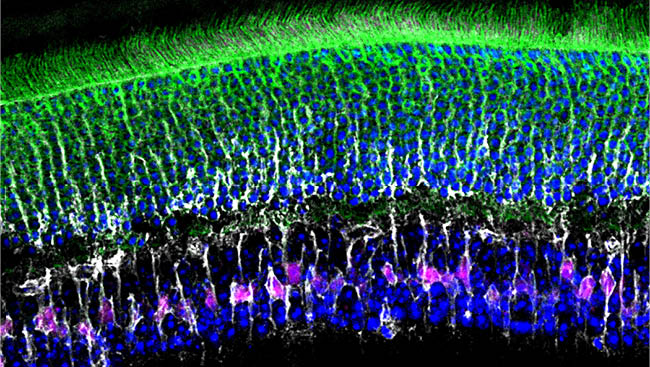
 Journal ArticleRod and cone photoreceptor cells selectively contact different compartments of axon-bearing retinal horizontal cells in the mammalian retina. Cones synapse exclusively on the soma whereas rods synapse exclusively on a large axon terminal compartment. The possibility that rod signals can travel down the axon from terminal to soma has been proposed as a means of producing spectrally opponent interactions between rods and cones, but there is conflicting data about whether this actually occurs. The spectral overlap between rods and cones in mouse makes it difficult to stimulate rod and cone pigments separately. We therefore used optogenetic techniques to analyze photoreceptor inputs into horizontal somas by selectively expressing channelrhodopsin in rods and/or cones. Optogenetic stimulation of rods and cones both evoked large fast inward currents in horizontal cell somas. Cone-driven responses were abolished by eliminating synaptic release in a cone-specific knockout of the exocytotic calcium sensor, synaptot...May 27, 2025
 -
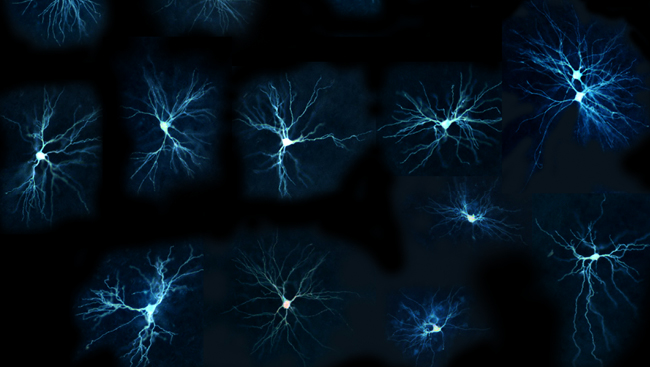 Article Scientific ResearchDetermination of postsynaptic targets, as well as the shape and size of the synaptic junctions, provides critical data about synaptic functionality and circuit organization. As far as we know, 3D synaptic morphology has never been performed together with the identification of postsynaptic targets in normal human brain samples or in the brain of patients with Alzheimer’s disease (AD). Thus, this study represents the first attempt to unveil the synaptic organization of the neuropil of the human brain at the ultrastructural level. Thanks to 3D electron microscopy (FIB/SEM technology), it is possible to obtain large numbers of 3D reconstructed synapses. This study provides a large new quantitative ultrastructure dataset of the transentorhinal cortex, including both normal and AD cases. In addition, the morphological synaptic alterations and changes in the postsynaptic targets found in AD may further understanding of the relationship between alterations of the synaptic circuits and the cognitive deterioration observed in these patients.Sep 26, 2019
 -
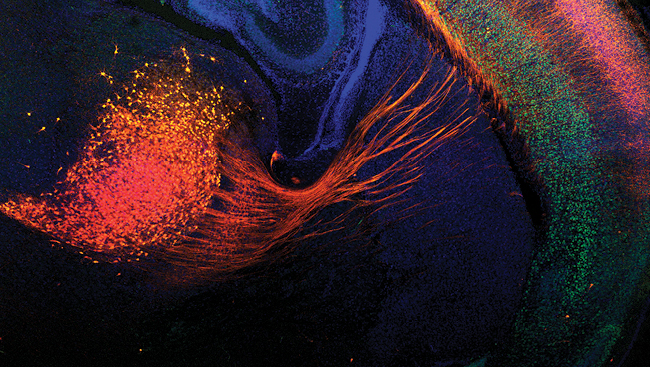 Article Scientific ResearchAdolescence — the transition from childhood to adulthood — is a time of great change in the brain and behavior. In addition to sexual maturity, individuals also develop social and emotional skills during this time that will serve them as adults. Traditionally, researchers trying to understand this period have focused on a mismatch in the brain between increased sensitivity to rewarding stimuli and still-developing inhibitory control, which appears to lead to vulnerability to psychiatric disorders and risky behavior such as drug-seeking. What follows is a discussion of how hormones, the brain, and social factors affect adolescent development.Sep 19, 2019
 -
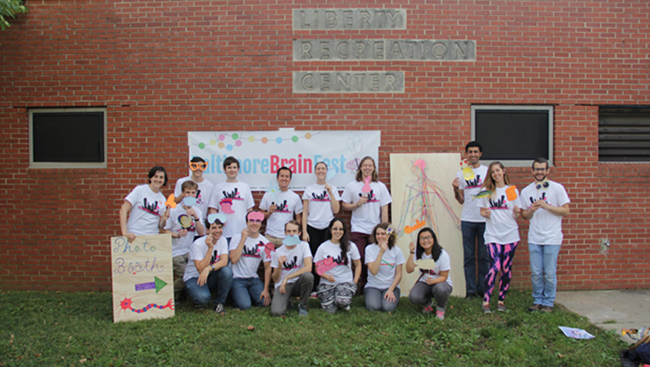 Article OutreachSince becoming president of SfN’s Greater Baltimore Chapter earlier this year, Kristina Nielsen has noted the chapter’s enthusiasm for sharing knowledge with the community. She has a lot of ideas — launching a website and establishing other communications channels among them — and is considering ways to further coordinate activities and recognize chapter members for their efforts. “I'm amazed by how much the students and postdocs are doing in terms of outreach. It's impressive,” she says. Here she shares her observations of the neuroscience community in Baltimore, outlines some of the numerous outreach activities the chapter coordinates among its constituent organizations, and explains how connecting with the Baltimore community improves science by opening conversations and encouraging youth to explore careers in the field.Sep 17, 2019




