



Filter
-
(133)
-
(734)
-
(4)
-
(1)
-
(47853)
-
(92)
-
(25)
-
(14)
-
(435)
-
(7)
-
(185)
-
(8)
-
(33)
-
(17)
-
(7)
-
(10)
-
(9)
-
(5)
-
(21)
-
(8)
-
(12)
-
(9)
-
(3)
-
(10)
-
(10)
-
(56)
-
(45)
-
(12)
-
(3)
-
(7)
-
(6)
-
(5)
-
(8)
-
(7)
-
(11)
-
(58)
-
(13)
-
(31)
-
(8)
-
(5)
-
(10)
-
(5)
-
(16)
-
(4)
5831 - 5840
of 52788 results
-
 Video TrainingIn this presentation, Stephanie Cragg and Yevgenia Kozorovitskiy will cover the basics of using optogenetics in acute brain slices, also called ex vivo. Specifically, they will: - Identify key concepts in the design and interpretation of ex vivo optogenetic experiments. - Describe critical parts and equipment for ex vivo optogenetics experiments. After watching this presentation, you should be able to understand the basic setup and key concepts for ex vivo optogenetics experiments.
 -
 Video TrainingIn this presentation, Patrick Rothwell will cover why and when to use optogenetics in acute brain slices, also called ex vivo. Specifically, Rothwell will: - Identify scientific questions that can be addressed using optogenetics in ex vivo preparations. - Compare optogenetics to alternative ex vivo methodologies. After watching this presentation, you should be able to better understand applications of optogenetic approaches in ex vivo preparations.
 -
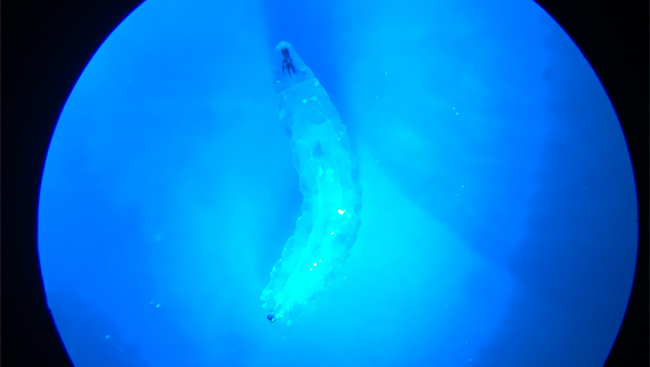 Article TrainingBy Heather J. Rhodes Optogenetics is such an important and exciting tool in neuroscience research that I decided to add it to my undergraduate courses at Dennison College, the liberal arts college where I teach. Although I’d never used optogenetics as part of my own research, I’ve now successfully added a Drosophila optogenetics lab to one of my courses with low costs, reasonable preparation, and meaningful impact. Students benefited from a hands on experience with in vivo optogenetics, and they even designed their own experiments. In this article, and Implementing Optogenetics in the Classroom Part Two: C. Elegans, I share my advice for adopting optogenetics approaches for teaching purposes. Why Drosophilia Drosophila are an effective model system for optogenetics. You can order a variety of genetic lines and they are relatively easy to raise and cross, allowing you to express channel rhodopsin or other effectors (halorhodopsin or TRPA1, for instance) in specific subsets of neurons. Because the Drosophila larva are translucent, you can activate channel rhodopsin in vivo with an LED light source while observing behavior. In the lab I describe below, larvae exhibit an instantaneous rigid paralysis when blue light is applied. This is dramatic and easy to measure. Furthermore, many schools already use Drosophila for genetics or other courses, meaning you may already have most of the supplies you need right down the hall.
 -
 Video TrainingIn this presentation, Mario Penzo will describe the various strategies commonly employed for the delivery of bacterial opsins to the nervous system. Specifically, Penzo will: - Describe different opsin delivery methods, such as virus injection, electroporation, and use of transgenic mice. - Identify, for a particular delivery strategy (adeno-associated virus vectors), the importance of the various serotypes available. After watching this presentation, you should be able to understand the pros and cons of the different opsin delivery methods.
 -
 Video TrainingIn this presentation, Lisa Gunaydin will introduce some of the common uses of optogenetics in an in vivo setting. Specifically, Gunaydin will: - Describe different purposes of optogenetics in vivo, such as to manipulate behavior and test functional connectivity. - Introduce the role of combining optogenetics with other methods, such as neural recordings or imaging. - Introduce translational applications of optogenetics to develop new therapeutic paradigms. After watching this presentation, you should be able to describe several types of in vivo experiments in which optogenetics can be useful.
 -





