



Filter
-
(133)
-
(733)
-
(4)
-
(1)
-
(47833)
-
(91)
-
(25)
-
(14)
-
(433)
-
(7)
-
(181)
-
(8)
-
(33)
-
(17)
-
(7)
-
(9)
-
(9)
-
(5)
-
(21)
-
(8)
-
(12)
-
(9)
-
(3)
-
(10)
-
(10)
-
(56)
-
(45)
-
(12)
-
(3)
-
(7)
-
(6)
-
(5)
-
(8)
-
(7)
-
(11)
-
(58)
-
(13)
-
(30)
-
(8)
-
(5)
-
(10)
-
(5)
-
(14)
-
(4)
1401 - 1410
of 52754 results
-
 Journal ArticleMaintenance of normal structure of the enteric nervous system (ENS), which regulates key gastrointestinal functions, requires robust homeostatic mechanisms, since by virtue of its location within the gut wall, the ENS is subject to constant mechanical, chemical, and biological stressors. Using transgenic and thymidine analogue-based experiments, we previously discovered that neuronal turnover – where continual neurogenesis offsets ongoing neuronal loss at steady state – represents one such mechanism. Although other studies confirmed that neuronal death continues into adulthood in the myenteric plexus of the enteric nervous system (ENS), the complicated nature of thymidine analogue presents challenges in substantiating the occurrence of adult neurogenesis. Therefore, it's vital to employ alternative, well-recognized techniques to substantiate the existence of adult enteric neurogenesis in the healthy gut. Here, by using established methods of assessing nuclear DNA content and detecting known mitotic marker ...Feb 11, 2025
 -
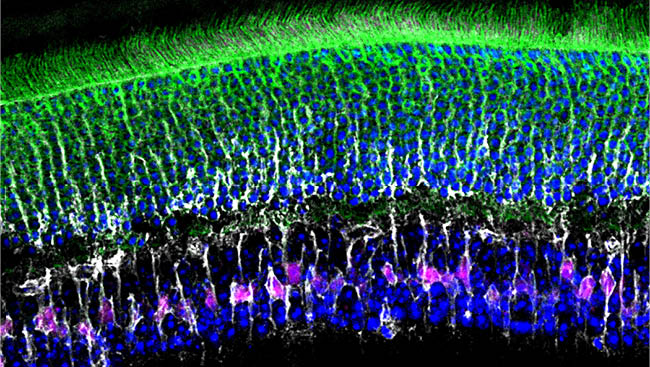 Article Scientific ResearchMaterial below summarizes the article, Learning and Stress Shape the Reward Response Patterns of Serotonin Neurons, published on September 13, 2017, in JNeurosci and authored by Weixin Zhong, Yi Li, Qiru Feng, and Minmin Luo. The ability to predict future events is critical for the survival of an organism. Prediction via associative learning can prepare animals to gain rewards while avoiding disadvantages. Classical Pavlovian conditioning is an important means to create predictive associations. During conditioning, a previously neutral item — unconditioned stimulus (US), which can be either rewarding or aversive, is repeatedly paired with a biologically salient stimulus — conditioned stimulus (CS). The CS acquires importance after conditioning if it consistently predicts the occurrence of the US.Jan 25, 2018
 -
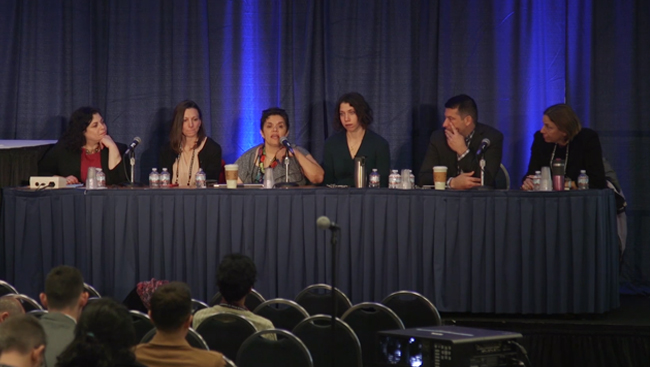 Video Annual Meeting Career PathsThis workshop provides insight for participants who are approaching a career transition, either as progression in the academic pipeline or from one career path to another. Panelists include scientists at various stages of their careers across academia, industry, government, and science social media. They discuss the paths they have taken and what helped them obtain their positions. Their goal is to highlight the number of different opportunities that neuroscience offers and provide information on how to choose and prepare for these career transitions.Jan 23, 2018
 -
Journal ArticleFunctional imaging studies indicate that both the assessment of a person as untrustworthy as well as the assumption that a person has a sexually transmitted infection are associated with activation in regions of the salience network. However, studies are missing that combine these aspects and investigate the perceived trustworthiness of individuals previously assessed with high or low probability of a sexually transmitted infection. During fMRI measurements, 25 participants viewed photographs of people pre-classified as having high or low HIV probability and judged their trustworthiness. In a post-rating, stimuli were rated for trustworthiness, attractiveness and HIV probability. Persons pre-classified as HIV- in contrast to those pre-classified as HIV+ were rated more trustworthy and with lower HIV probability. Activation in medial orbitofrontal cortex was higher for those rated and pre-classified as HIV- than HIV+. Based on the individual ratings, but not the pre-classification, there was significantly...Feb 10, 2025
-
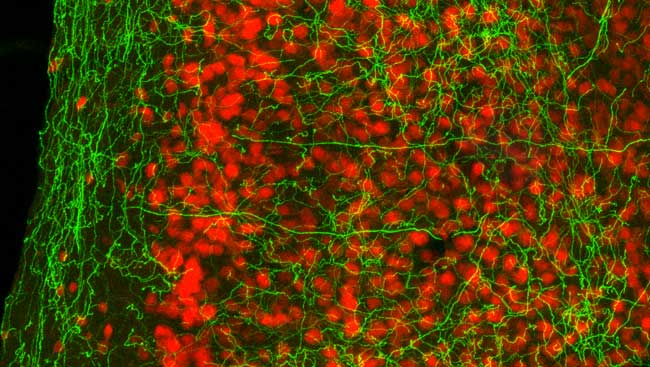 Article Scientific ResearchMaterial below summarizes the article, Feedback Inhibition Shapes Emergent Computational Properties Of Cortical Microcircuit Motifs, published on July 31, 2017, in JNeurosci and authored by Zeno Jonke, Robert Legenstein, Stefan Habenschuss, and Wolfgang Maass.Jan 18, 2018
 -
 Video DiversityThis is Lesson Five in the Implicit Bias Video Series from BruinX, the research and development unit within the University of California, Los Angeles's Office of Equity, Diversity and Inclusion. This video discusses the Implicit Association Test (IAT) and the wealth of data it has generated.Jan 17, 2018
 -
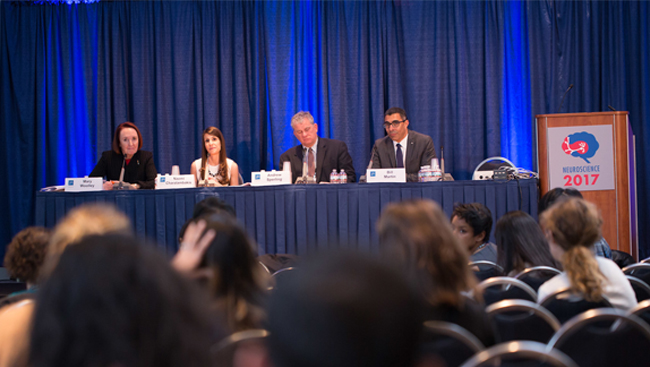 Annual Meeting Video AdvocacyBasic research is the foundation for all biomedical advances. For policymakers accustomed to the immediate impact of federal investments, the lag between scientific discoveries and medical breakthroughs clouds the long-term value of basic research. This Public Advocacy Forum panel discusses the essential role of basic scientific research to the research continuum.Jan 16, 2018
 -
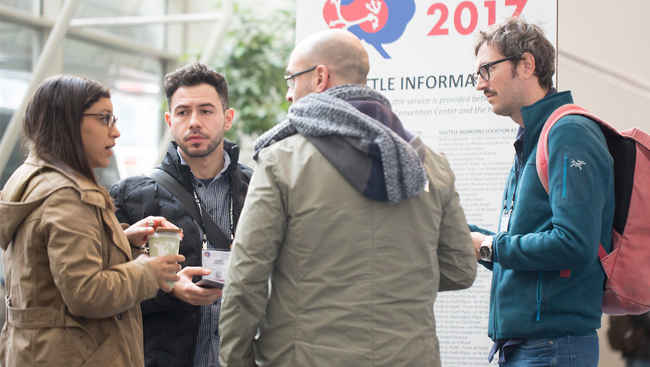 Article Professional DevelopmentJames Geddes, vice dean for research at the University of Kentucky College of Medicine, says, “Some of the most rewarding studies I've been involved with have been collaborative projects — either ones where I've approached others to collaborate, or where I've been approached to contribute. Collaborations help you think about new areas of research, expand your horizons, and have fun.” In this interview, Geddes shares the basics of collaborations, from why and how you should set one up to what to do if issues arise.Jan 16, 2018
 -
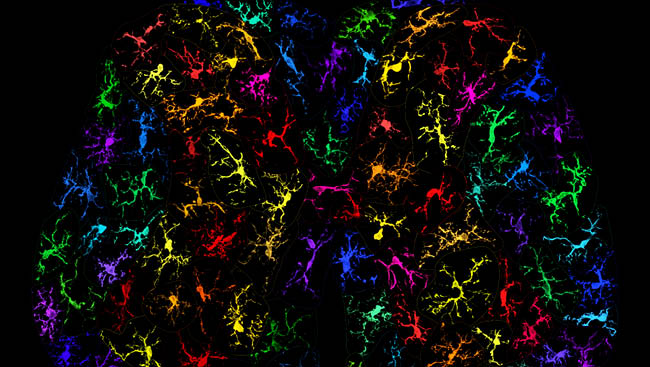 Article Scientific ResearchMaterial below summarizes the article, MAP1B Light Chain Modulates Synaptic Transmission via AMPA Receptor Intracellular Trapping, published on September 13, 2017, in JNeurosci and authored by Rocío Palenzuela, Yolanda Gutiérrez, Jonathan E. Draffin, Argentina Lario, Marion Benoist, and José A. Esteban.Jan 11, 2018
 -
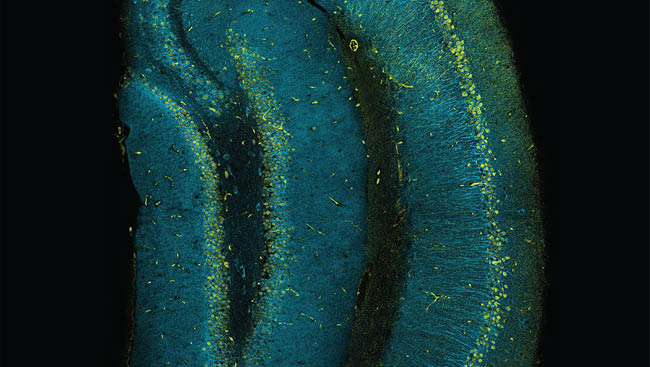 Article Career PathsXinnan Wang is an assistant professor of neurosurgery at the Stanford University School of Medicine. She led a breakout group at the 2016 Neurobiology of Disease Workshop, From Pediatric Encephalopathy to Alzheimer's: Linking Mitochondria to Neurological Diseases, and presented in the 2017 follow-up webinar, Linking Mitochondria to Neurological Disease. Here, she shares what inspired her to work in the mitochondrial research field, what questions she is trying to answer through her current research, and how she thinks the field can continue to make advances against certain diseases. As told to, and edited by, SfN staff.Jan 9, 2018




