



Filter
-
(133)
-
(733)
-
(4)
-
(1)
-
(47830)
-
(91)
-
(25)
-
(14)
-
(433)
-
(7)
-
(181)
-
(8)
-
(33)
-
(17)
-
(7)
-
(9)
-
(9)
-
(5)
-
(21)
-
(8)
-
(12)
-
(9)
-
(3)
-
(10)
-
(10)
-
(56)
-
(45)
-
(12)
-
(3)
-
(7)
-
(6)
-
(5)
-
(8)
-
(7)
-
(11)
-
(58)
-
(13)
-
(30)
-
(8)
-
(5)
-
(10)
-
(5)
-
(14)
-
(4)
1031 - 1040
of 52751 results
-
 Journal ArticleThe rodent brain contains 70,000,000+ neurons interconnected via complex axonal circuits with varying architectures. Neural pathologies are often associated with anatomical changes in these axonal projections and synaptic connections. Notably, axonal density variations of local and long-range projections increase or decrease as a function of the strengthening or weakening, respectively, of the information flow between brain regions. Traditionally, histological quantification of axonal inputs relied on assessing the fluorescence intensity in the brain region of interest. Despite yielding valuable insights, this conventional method is notably susceptible to background fluorescence, postacquisition adjustments, and inter-researcher variability. Additionally, it fails to account for nonuniform innervation across brain regions, thus overlooking critical data such as innervation percentages and axonal distribution patterns. In response to these challenges, we introduce AxoDen, an open-source semiautomated platfo...Jun 1, 2025
 -
 Journal ArticleUnderstanding the ability to self-evaluate decisions is an active area of research. This research has primarily focused on the neural correlates of self-evaluation during visual tasks and whether neural correlates before or after the primary decision contribute to self-reported confidence. This focus has been useful, yet the reliance on subjective confidence reports may confound our understanding of key everyday features of metacognitive self-evaluation: that decisions must be rapidly evaluated without explicit feedback and unfold in a multisensory world. These considerations led us to hypothesize that an automatic domain-general metacognitive signal may be shared between sensory modalities, which we tested in the present study with multivariate decoding of electroencephalographic (EEG) data. Participants ( N = 21, 12 female) first performed a visual task with no request for self-evaluations of performance, prior to an auditory task that included rating decision confidence on each trial. A multivariate cl...Jun 1, 2025
 -
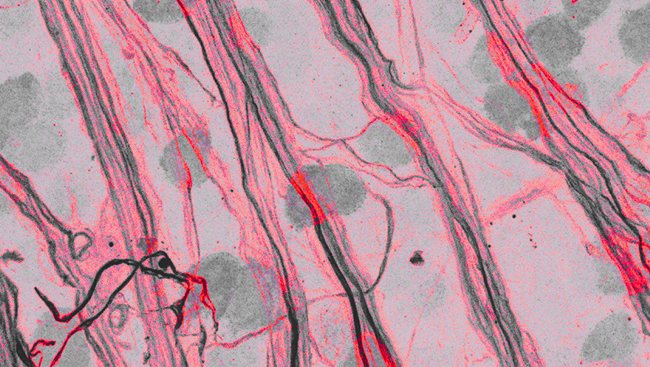 Article Professional DevelopmentWhat can neuroscience tell us about ethics? Some say nothing – ethics is a normative discipline that concerns the way the world should be, while neuroscience is normatively insignificant: it is a descriptive science which tells us about the way the world is. This seems in line with what is sometimes called “Hume’s Law”, the claim that one cannot derive an ought from an is. This claim is contentious and its scope unclear, but it certainly does seem true of demonstrative arguments, at the least. Neuroethics, by its name, however, seems to suggest that neuroscience is relevant for ethical thought, and indeed some have taken it to be a fact that neuroscience has delivered ethical consequences. It seems to me that there is some confusion about this issue, and so here I’d like to clarify the ways in which I think neuroscience can be relevant to ethics.Oct 23, 2019
 -
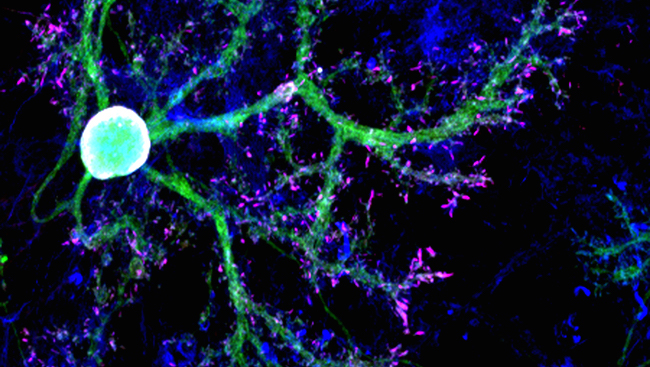 Article Scientific ResearchTrainingSpace (TS) is an online hub that aims to make neuroscience educational materials more accessible to the global neuroscience community. As a hub, TS provides users with access to: Multimedia educational content from courses, conference lectures, and laboratory exercises from some of the world’s leading neuroscience institutes and societies. Study tracks to facilitate self-guided study. Tutorials on tools and open science resources for neuroscience research. A Q&A forum. A neuroscience encyclopedia that provides users with access to over 1,000,000 publicly available datasets as well as links to literature references and scientific abstracts. Topics currently included in TS include: general neuroscience, clinical neuroscience, computational neuroscience, neuroinformatics, computer science, data science, and open science. All courses and conference lectures in TS include a general description, topics covered, links to prerequisite courses if applicable, and links to software described in or required for the course, as well as links to the next lecture in the course or more advanced related courses. To learn more about TrainingSpace, visit: https://training.incf.orgOct 15, 2019
 -
 Webinar Scientific ResearchEffects of early life stress are found to be dependent on many factors, including sex and genetic background, the age of early exposure, and the age and context within which the long-term impact is examined. This webinar will discuss the resultant high individual variability of early life stress and its impact on coping abilities and cognitive functions later in life.Oct 14, 2019
 -
 Podcast AdvocacyMuch of science advocacy is local by nature, but it also has tremendous potential to bring neuroscientists together on a global scale. In this episode of History of SfN: 50th Anniversary, Bill Martin, the president and chief operating officer of Blackthorn Therapeutics, traces the evolution of SfN’s role in global advocacy efforts throughout his time on its Government and Public Affairs Committee and continued involvement with the Society.Oct 10, 2019
 -
 Podcast Scientific ResearchIn this episode of History of SfN: 50th Anniversary, Bernice Grafstein, Vincent and Brooke Astor Distinguished Professor in Neuroscience at Cornell University, Trustee and Vice-President of the Grass Foundation — and the first female president of the Society for Neuroscience — recounts how the formation of the Society for Neuroscience brought together neuroscientists of diverse backgrounds.Oct 10, 2019
 -
-Mickey-Goldberg-on-the-Expansion-of-SfN.jpg) Podcast OutreachIn its 50 years, the Society for Neuroscience has become an international society representing the interests of scientists from diverse backgrounds across the globe. In this episode of History of SfN: 50th Anniversary, Mickey Goldberg, David Mahoney Professor of Brain and Behavior at Columbia University, and a past president of the Society for Neuroscience, describes how the Society and meeting have evolved, including through the digitization of abstract submissions. History of SfN: 50th Anniversary is a limited series podcast highlighting stories from the history of the Society for Neuroscience, recounting groundbreaking moments in the growth of the Society from the perspectives of current, past, and future leaders. Alongside his scientific background and time as SfN president, Goldberg also offers a look at his involvement with science outreach and the importance of outreach to building public trust in science.Oct 10, 2019
Podcast OutreachIn its 50 years, the Society for Neuroscience has become an international society representing the interests of scientists from diverse backgrounds across the globe. In this episode of History of SfN: 50th Anniversary, Mickey Goldberg, David Mahoney Professor of Brain and Behavior at Columbia University, and a past president of the Society for Neuroscience, describes how the Society and meeting have evolved, including through the digitization of abstract submissions. History of SfN: 50th Anniversary is a limited series podcast highlighting stories from the history of the Society for Neuroscience, recounting groundbreaking moments in the growth of the Society from the perspectives of current, past, and future leaders. Alongside his scientific background and time as SfN president, Goldberg also offers a look at his involvement with science outreach and the importance of outreach to building public trust in science.Oct 10, 2019 -
 Podcast Scientific ResearchIn this episode of History of SfN: 50th Anniversary, Marder, Victor and Gwendolyn Beinfield Professor of Neuroscience at Brandeis University and a past president of the Society for Neuroscience, expands on this thought, sharing details from her time on SfN’s Program Committee and about the evolution of annual meeting programs, as well as her award-winning research on motor neurons.Oct 10, 2019
 -
 Podcast Scientific ResearchIn this episode of History of SfN: 50th Anniversary, Marina Picciotto, Charles B.G. Murphy Professor of Psychiatry at Yale University and the editor-in-chief of JNeurosci, notes how the journal has evolved in its nearly 40 years to mirror the changing ways in which research is shared.Oct 10, 2019




