



Filter
-
(133)
-
(732)
-
(4)
-
(1)
-
(47823)
-
(91)
-
(25)
-
(14)
-
(433)
-
(7)
-
(180)
-
(8)
-
(33)
-
(17)
-
(7)
-
(9)
-
(8)
-
(5)
-
(21)
-
(8)
-
(12)
-
(9)
-
(3)
-
(10)
-
(10)
-
(56)
-
(45)
-
(12)
-
(3)
-
(7)
-
(6)
-
(5)
-
(8)
-
(7)
-
(11)
-
(58)
-
(13)
-
(30)
-
(8)
-
(5)
-
(10)
-
(5)
-
(14)
-
(4)
21 - 30
of 52740 results
-
 Webinar Video Scientific ResearchJoin this interactive session as Elly Nedivi and Josiah Boivin discuss their paper, “Cortical Somatostatin Innervation Follows a Unique Experience-Independent Developmental Trajectory”, with JNeurosci Reviewing Editor Serena Dudek. Attendees can submit questions at registration and live during the webinar.Apr 10, 2026
 -
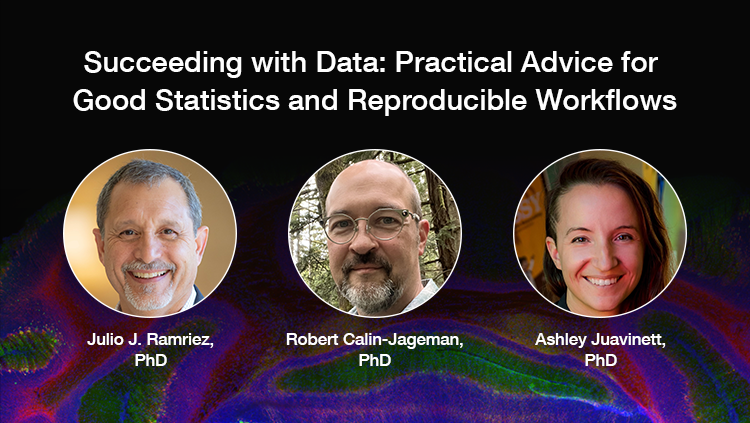 Webinar TrainingFrom the moment you start designing an experiment through your final manuscript, you have decisions to make. This webinar will help you plan and implement your statistical approach, avoid pitfalls, and generate analytics workflows for open, reproducible science.Apr 10, 2026
 -
 Article Scientific ResearchIn clinical practice, the concept of resilience is a well-known and widely-used term. It is related to this set of coping skills and strategies for day-to-day life.Apr 9, 2026
 -
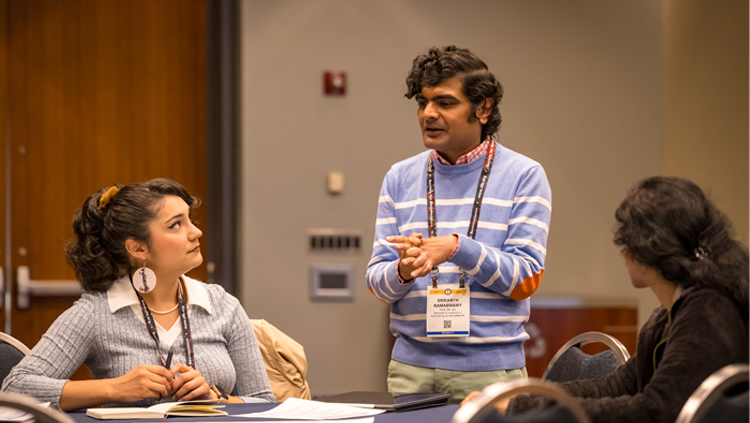 Article TrainingSrikanth Ramaswamy, PhD, breaks down the emerging field of NeuroAI, including early advances, promises, and challenges, and resources for early career scientists to start learning and contributing to the growing field. For more about Ramaswamy and his journey into NeuroAI, watch this interview on Neuronline. Artificial intelligence (AI) has achieved remarkable feats in recent years, from diagnosing diseases to generating human-like text. Yet, AI systems consume vast amounts of energy, often hallucinate, struggle to adapt to new situations, and fail in unpredictable ways. What if the next breakthrough comes from understanding how our brains actually work? This gap between artificial and natural intelligence is precisely what drives NeuroAI, an emerging field bridging neuroscience and AI that is transforming both disciplines.Mar 25, 2026
 -
 Webinar Annual Meeting Professional DevelopmentOrganizing a nanosymposium, or “nano,” is a fantastic opportunity to network and connect with others in your field. Don’t know how to organize a nanosymposium or find others to participate? This webinar will review how to select a topic, identify and recruit others to join the nano, and develop a strong nano proposal.Mar 19, 2026
 -
 Webinar Annual Meeting Video Professional DevelopmentIn this hour-long webinar, we will discuss how to prepare an informative and engaging abstract, including where to start, how to best convey the key points that will be presented, and how to effectively use the abstract submission system.Mar 19, 2026
 -
 Article Professional DevelopmentAs a third-year medical student in India, I decided I was going to build a career in neuroscience, and I was going to do it in a whole new country. I did my due diligence, researched everything online, went down the rabbit hole of Reddit threads and medical student forums, and mapped out the steps that I needed to take to achieve this goal. It was also the first time I realized the magic of simply asking for advice.Mar 10, 2026
 -
 Article Scientific ResearchIn this discussion, let’s explore how we can better balance engineering-driven innovation with neuroscience to ensure responsible and biologically grounded advancement.Mar 9, 2026
 -
.png) Article Career PathsIn this Careers in Neuroscience profile, the spotlight is on Michael W. Nestor, PhD, board director of the Government–University–Industry–Philanthropy Research Roundtable at the National Academies of Sciences, Engineering, and Medicine, and founder and chief scientific officer of Autica Bio. Learn about his cross-sector work on neuroscience and science policy and what skills, education, and experiences you need to succeed in these fields.Mar 6, 2026
Article Career PathsIn this Careers in Neuroscience profile, the spotlight is on Michael W. Nestor, PhD, board director of the Government–University–Industry–Philanthropy Research Roundtable at the National Academies of Sciences, Engineering, and Medicine, and founder and chief scientific officer of Autica Bio. Learn about his cross-sector work on neuroscience and science policy and what skills, education, and experiences you need to succeed in these fields.Mar 6, 2026 -
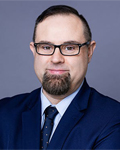 Michael W. Nestor, PhD, is board director of the Government–University–Industry–Philanthropy Research Roundtable at the National Academies of Sciences, Engineering, and Medicine and founder and chief scientifc officer of Autica Bio. Nestor earned his PhD in neuroscience from the University of Maryland School of Medicine, his BA in philosophy and psychology from the University of Maryland, Baltimore County, and a certificate in M&A and corporate development Strategies from Wharton Executive Education. Nestor also has a certificate in project management from the University of California, Irvine, and a dual certificate in regulatory affairs for medical devices and pharmaceuticals.Mar 5, 2026




