



Filter
-
(133)
-
(732)
-
(4)
-
(1)
-
(47823)
-
(91)
-
(25)
-
(14)
-
(433)
-
(7)
-
(180)
-
(8)
-
(33)
-
(17)
-
(7)
-
(9)
-
(8)
-
(5)
-
(21)
-
(8)
-
(12)
-
(9)
-
(3)
-
(10)
-
(10)
-
(56)
-
(45)
-
(12)
-
(3)
-
(7)
-
(6)
-
(5)
-
(8)
-
(7)
-
(11)
-
(58)
-
(13)
-
(30)
-
(8)
-
(5)
-
(10)
-
(5)
-
(14)
-
(4)
131 - 140
of 52740 results
-
 Article Scientific ResearchHave you ever noticed how time stretches endlessly during a tedious presentation yet passes quickly when you’re engaged in something exciting? This isn’t just a trick of the mind, but a process shaped by the brain, and new results show anterior cingulate cortex (ACC) neurons reveal how it might work. These neurons respond to experiences and events in ways that influence time perception. At our lab, we uncovered a novel temporal encoding mechanism—where neural representations of events slowly drift over time. This discovery raises questions about productivity, time management, and mental well-being. Could restructuring daily routines—such as time-blocking, role rotation, and mindful breaks—alter our perception of time? How effective is this alteration? More importantly, this study explores how much control we can exert over time perception to improve efficiency and reduce burnout. Here, we see the ACC supporting productivity strategies, particularly those relevant to researchers and graduate students.Apr 14, 2025
 -
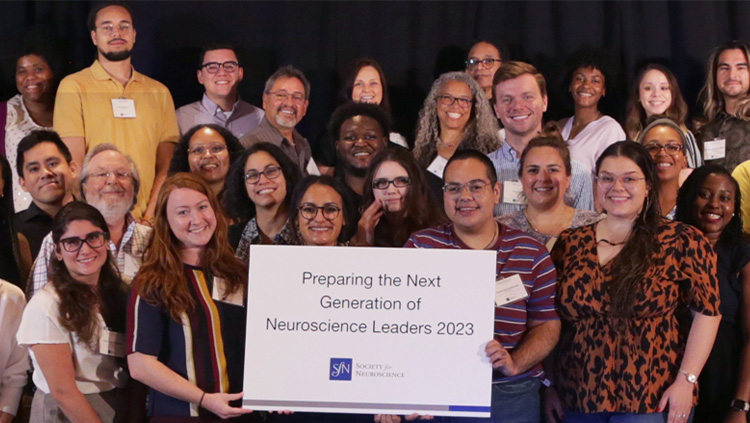 A collection of public Preparing the Next Generation of Neuroscience Leaders articles.Apr 10, 2025
 -
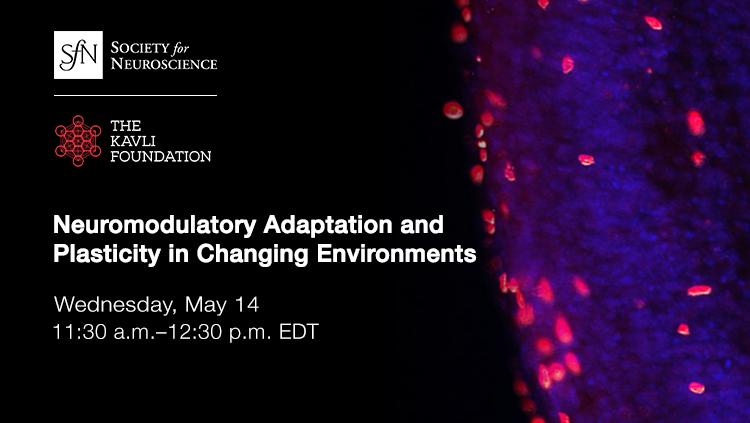 Webinar Video Scientific ResearchJoin speakers Jan Siemens, PhD, and Kavli Prize Laureate Eve Marder, PhD, for the second session of a collaborative series by the Society for Neuroscience and The Kavli Foundation. Moderated by Laura Duvall, PhD, this webinar will explore mechanisms by which nervous systems in both warm and cold-blooded organisms acclimate to temperature extremes, offering insights into neuromodulatory adaptation and plasticity across species with drastically different nervous system organizations. Presentations and discussions will highlight recent advances in the field, shedding light onto mechanisms of neural adaptation in changing environments.Apr 9, 2025
 -
 Karina Alviña, PhD, is an assistant professor of neuroscience at the University of Florida College of Medicine. She received her PhD in biological sciences with a concentration in physiology from the Pontifical Catholic University of Chile in Santiago, Chile. She went on to complete her first postdoctoral fellowship at Columbia University and a second postdoctoral fellowship at the Albert Einstein College of Medicine. Alviña’s work focuses on various aspects of fundamental cellular physiology in the brain. In particular, she studies how specific areas involved in learning and memory are influenced by environmental factors such as stress, exercise and dietary habits, and neurodegenerative conditions such as Alzheimer’s disease.Apr 8, 2025
 -
 Webinar Annual Meeting Video Professional DevelopmentIn this one-hour long webinar, we will discuss how to prepare an informative and engaging abstract, including where to start, how to best convey the key points that will be presented, and how to effectively use the abstract submission system. Each speaker will give a brief presentation, followed by open discussion and Q&A with attendees. For more information on abstracts visit here.Apr 8, 2025
 -
 Kazi Farhana Afroz, Ph.D., is a postdoctoral fellow in the Department of Pharmacology andChemical Biology at Emory University. Farhana earned her bachelor’s degree in Biotechnology and Genetic Engineering from Khulna University, Bangladesh in 2010. She worked on the prospects and problems of biofuel production in Bangladesh for her undergrad thesis. In 2018, she started her graduate study in the Department of Biological Sciences at Texas Tech University. She graduated with a Ph.D. in Neuroscience concentration in the Spring, of 2022 and her research project was on the impact of maternal salt consumption on the development of offspring gut microbiome and Autism-like behavior. Farhana presented her Ph.D. research findings in posters at several regional and national conferences and got two first-author papers published. She received several fellowships and awards from Texas Tech University namely the Doctoral Dissertation Completion Fellowship, Best Dissertation Award, Graduate Research Grant, and 3MT thesis ...Apr 8, 2025
 -
 Taylor McCorkle is currently a second-year postdoctoral fellow at Temple University Department of Psychology and Neuroscience working under the mentorship of Dr. Ames Sutton Hickey. Dr. McCorkle studies the behavioral and neural mechanisms underlying maladaptive feeding behaviors that contribute to the development of obesity. Prior to this fellowship, she attended the University of Pennsylvania where she earned her BA in biology with a minor in psychology. She then went on to receive her MS and PhD in neuroscience at Drexel University College of Medicine, working in the lab of Dr. Ramesh Raghupathi. Dr. McCorkle’s thesis investigated sex-dependent mechanisms underlying cognitive deficits following repeated mild TBI in adolescent rats, focusing on the role of corticotrophin-releasing factor. Following her postdoctoral fellowship, she plans to establish her own research group, conducting translational research that investigates the neurobiological basis of how various environmental stressors influence the ov...Apr 8, 2025
 -
 Ramesh Raghupathi, PhD, is currently a tenured professor in the neurobiology and anatomy department at the Drexel University College of Medicine. His research interests focus on the role of neuronal and glial dysfunction in mediating chronic behavioral deficits following traumatic brain injury in children and adolescents. He has mentored high school, undergraduate, postbaccalaureate, medical, and graduate students throughout his career and is interested in public advocacy for science education and funding and improving diversity and equity in biomedical research. Through programs at the SfN and the Annual Biomedical Conference for Minoritized Scientists, he mentors students who come from socially and economically disadvantaged communities underrepresented in science and medicine through making decisions like choosing the correct graduate/medical school.Apr 8, 2025
 -
 Nishell received her Bachelor of Science degree in Psychology from Morgan State University. Currently a PhD candidate in the Department of Neurobiology and Anatomy at Drexel University College of Medicine, she is completing her dissertation under the guidance of Ramesh Raghupathi. Her research focuses on investigating the role of microglia in the chronic cellular changes and functional-behavioral deficits that occur following infant traumatic brain injury. Nishell's overarching goal is to explore potential therapeutic approaches that could improve the lives of individuals affected by traumatic injuries to the central nervous system. Outside of her research, she enjoys spending time with family and friends, hiking, and exploring Philadelphia.Apr 8, 2025
 -
 Podcast Professional DevelopmentIn this episode, mentor Claire Sexton and former mentee Naiara Demnitz share their neuroscience mentorship story. They reflect on trust and transparency in their relationship, the importance of including mentees in your network, and how they have adjusted to cultural differences when moving institutions. Listen for an engaging discussion that highlights how mentors can have a lasting impact on research and careers.Mar 26, 2025




